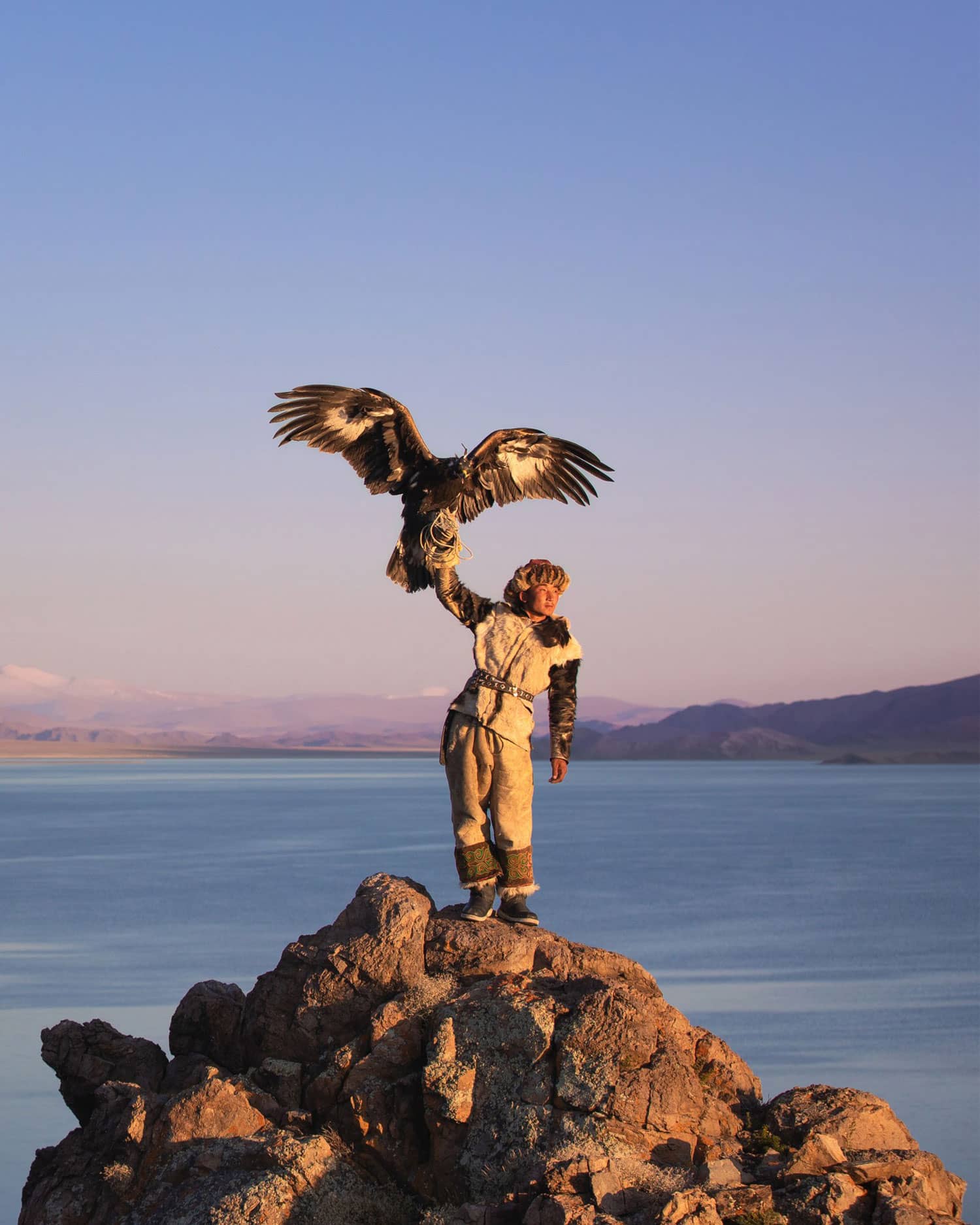

The Gobi Desert stretches across half a million square miles of Mongolia and northern China, ranking as the world’s sixth largest desert. Its significance lies not only in scale but in what it preserves: Cretaceous fossil beds, hardy ecosystems, and a cultural crossroads where nomadic traditions endure.
For scholars, it is a living laboratory of paleontology, climatology, and archaeology. For Mongolians, it is homeland and heritage. And for travelers, it is a place of profound encounter, where stone and sand reveal stories millions of years in the making.
At Nomadic Expeditions, we have spent over 30 years guiding travelers through this extraordinary region. Our journeys emphasize not just seeing the Gobi but engaging with it – interpreting its scientific discoveries, exploring its ecological significance, and connecting with the people who continue to call it home. We are equally committed to responsible travel that sustains these fragile environments, supports local communities, and ensures that future generations may continue to experience the Gobi’s wonders.
What follows are 10 landmarks that define the Gobi Desert. Each one represents places of discovery, continuity, and meaning – sites that reveal why the Gobi is not only unforgettable but essential to understanding Mongolia’s natural and cultural heritage.

Flaming Cliffs, Mongolia
1. Flaming Cliffs (Bayanzag)
The Flaming Cliffs, known locally as Bayanzag, are among the most scientifically significant sites in the Gobi Desert. Their striking red sandstone escarpments were deposited during the Late Cretaceous period, approximately 70-80 million years ago, when much of the region was a semi-arid basin shaped by shifting rivers and dunes.
In 1923, an expedition led by American naturalist Roy Chapman Andrews uncovered the first scientifically documented fossilized dinosaur eggs here, a discovery that revolutionized paleontology by confirming reproductive behaviors previously unknown in dinosaurs. Since then, Bayanzag has yielded the remains of numerous species, making it a cornerstone in our understanding of Asia’s dinosaur record.
The cliffs also illustrate ongoing processes of desert erosion and climate adaptation. Wind and rain continue to weather the sandstone, sometimes revealing fossils that have been hidden for millions of years.
Today, the Flaming Cliffs are recognized not only as a dramatic visual landmark, but also as a globally important paleontological heritage site. Nomadic families still graze livestock nearby, while digs continue to this day – linking Mongolia’s deep past with its living traditions.
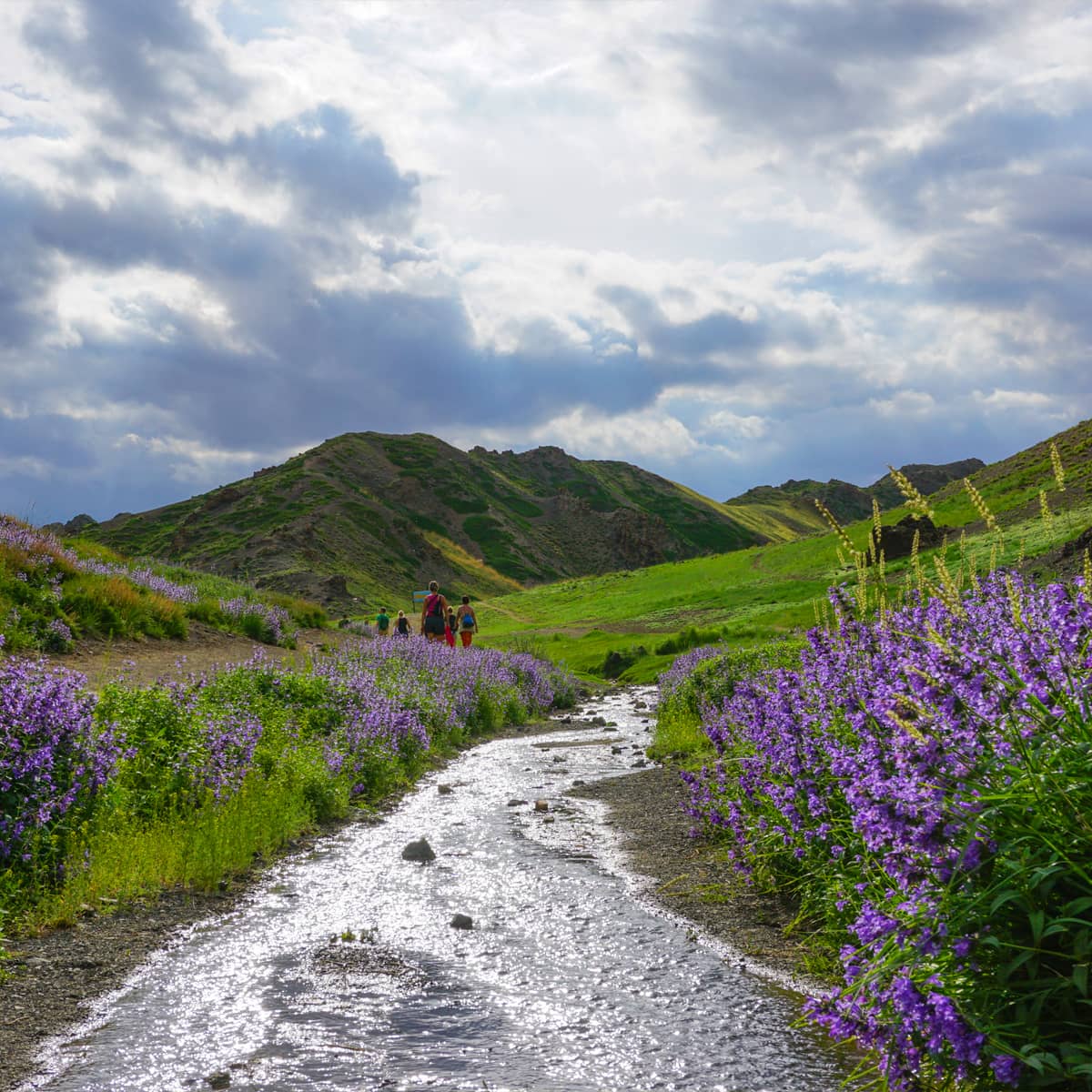
Yol Valley National Park, Family Visit
2. Yol Valley (Yolyn Am)
Situated within the Gurvan Saikhan Mountains, Yol Valley is an ecological outlier within the Gobi’s arid expanse. This deep gorge maintains a microclimate where streams flow and ice persists into summer months. Its alpine flora includes rare species such as edelweiss, while its fauna features the bearded vulture, a bird of prey with a wingspan of nearly three meters that feeds primarily on bone.
The valley also provides habitat for Siberian ibex and a variety of endemic plant species. This biodiversity is a reminder that deserts are not ecological voids but dynamic systems where adaptation is paramount.
Yol Valley National Park, Family Visit
3. Khongoryn Els (Singing Dunes)
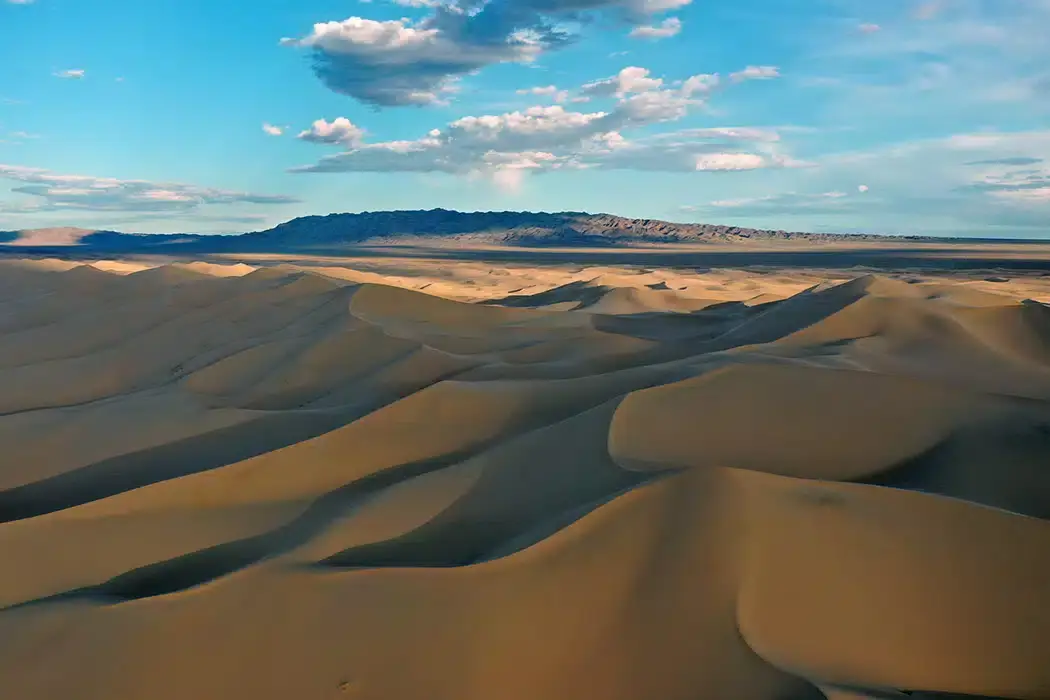
Known as the “Singing Dunes,” Khongoryn Els is one of Mongolia’s most iconic landscapes. Stretching for nearly 150 kilometers, with some dunes rising more than 300 meters, this massive dune field exemplifies aeolian processes that shape desert geomorphology. The low-frequency hum emitted when sand grains shift under certain conditions has been studied by physicists and remains one of the desert’s most curious natural phenomena.
At the foot of the dunes, seasonal rivers and oases sustain pockets of biodiversity, where reeds, grasses, and shrubs support both wildlife and pastoral herding. Bactrian camels, integral to nomadic livelihoods, are often seen grazing near these water sources.
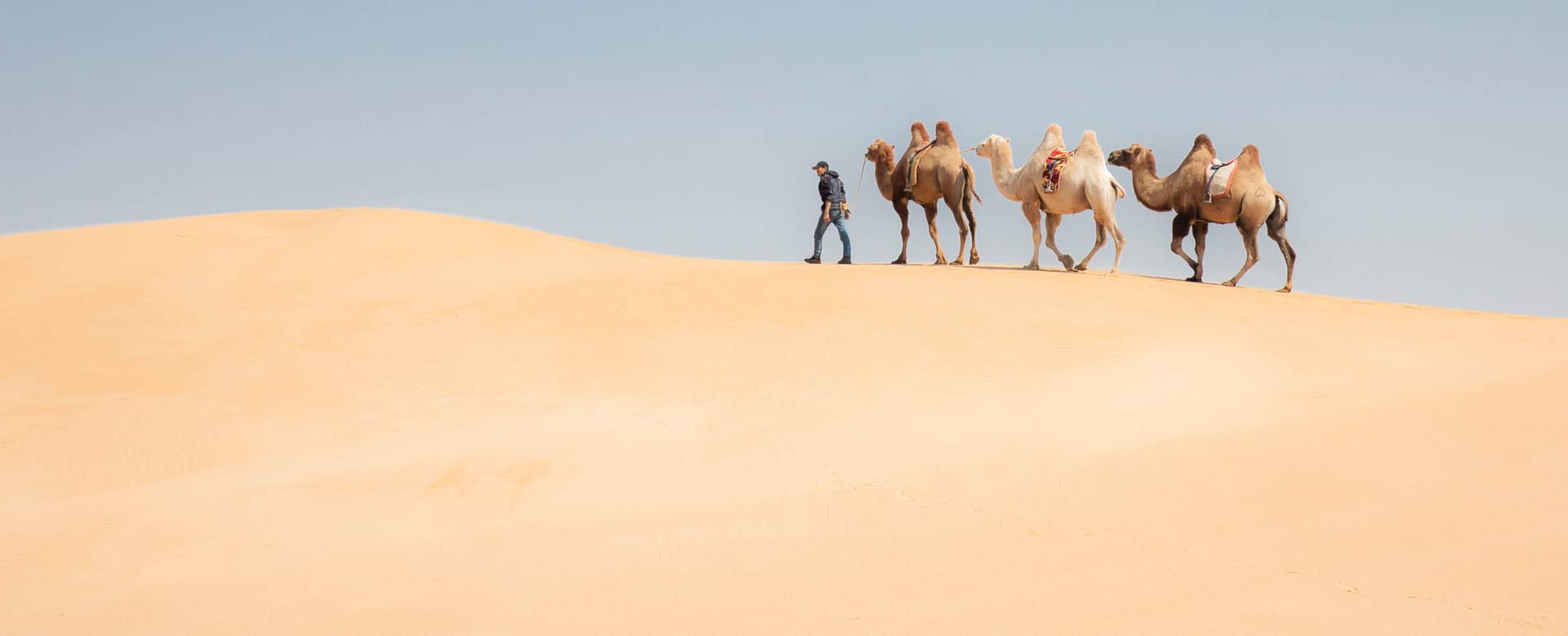
Moltsog Els, Camels Traversing Dunes
4. Moltsog Els
Smaller in scale than Khongoryn Els, Moltsog Els holds equal importance for understanding desert ecosystems. Here, dunes are interspersed with saxaul trees, a keystone species that anchors soil, prevents erosion, and provides food and shelter for desert fauna. Saxaul woodlands are recognized by conservationists as critical for maintaining biodiversity and combating desertification across Central Asia.
Moltsog Els is also culturally significant. Nomadic families graze camels in this region, and travelers are often welcomed into their gers, where they may learn traditional practices such as felt-making, dumpling preparation, or camel husbandry. These exchanges emphasize that the Gobi is not solely a geological or ecological phenomenon, but a lived landscape where culture and environment are deeply intertwined.
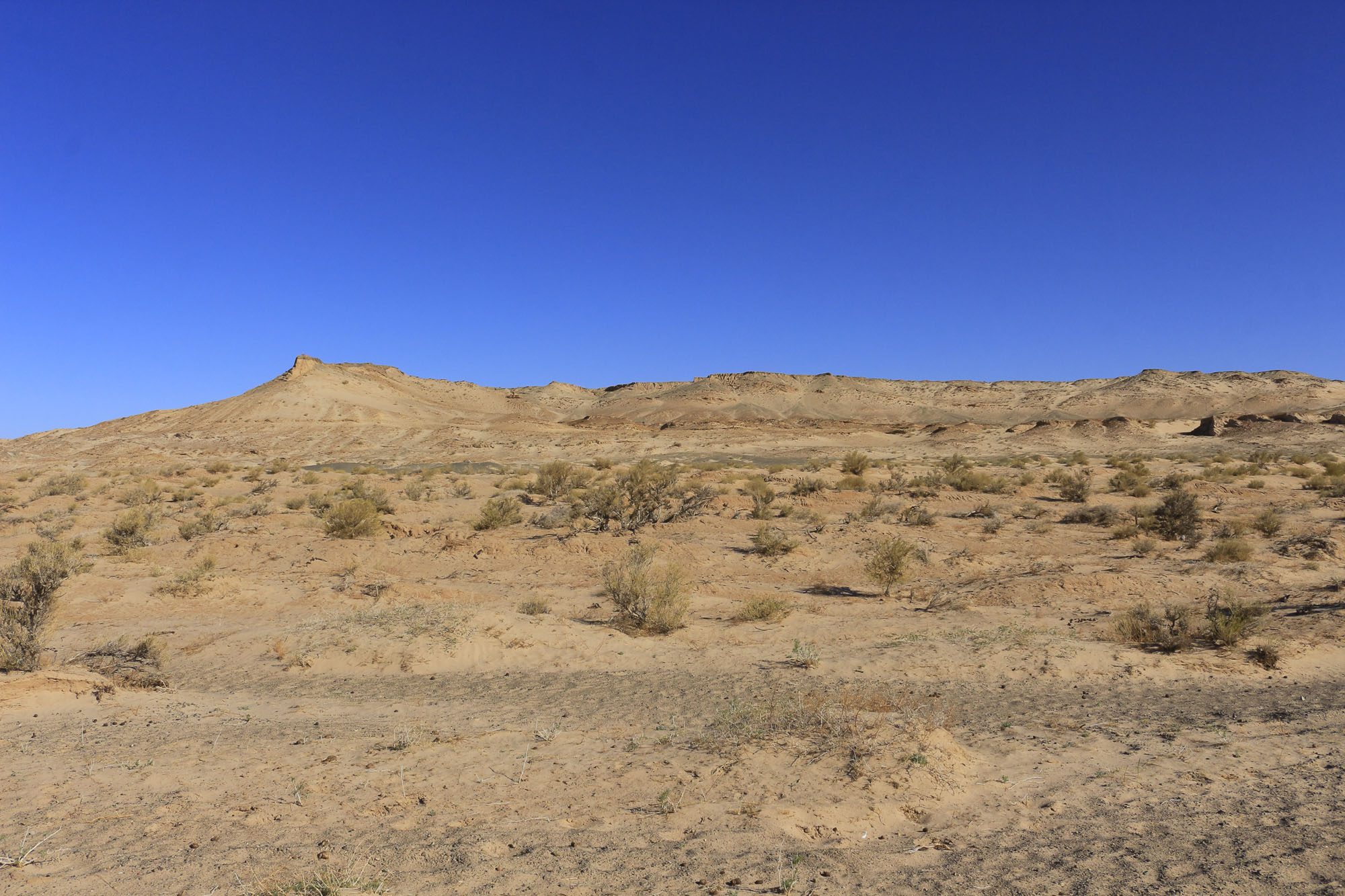
Tugregiin Shiree
5. Tugregiin Shiree
Remote and unmarked, Tugregiin Shiree is another landmark of global paleontological significance. It is most famous for the fossilized remains of a Velociraptor and a Protoceratops locked in combat – an extraordinary specimen that captures a prehistoric struggle frozen in time some 70 million years ago.
This site exemplifies the unique preservation conditions of the Gobi’s Cretaceous strata. Sudden burial in sandstorms likely trapped these animals mid-fight, creating one of paleontology’s most compelling discoveries. The stark plateau, with its sun-bleached ridges and open horizons, has produced additional fossils that deepen knowledge of the Late Cretaceous ecosystems of Central Asia.
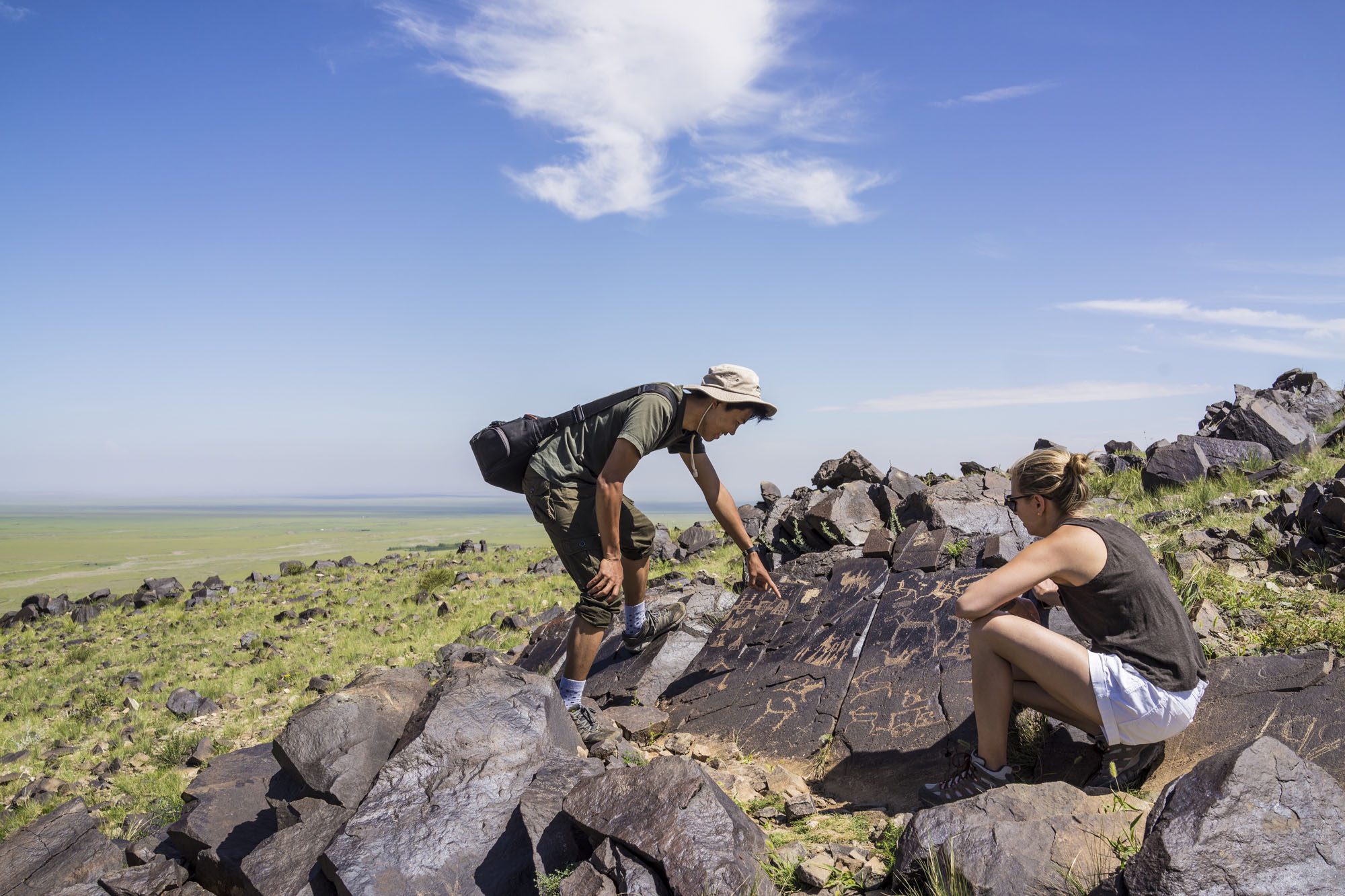
Havsgait Valley
6. Havsgait Valley
Tucked into the Altai Mountains, Havsgait Valley preserves one of Mongolia’s richest concentrations of prehistoric rock art. Petroglyphs here date back over 4,500 years and depict ibex, wolves, hunters, and abstract motifs. Archaeologists interpret them as evidence of Bronze Age cosmology, ritual practice, and subsistence strategies.
Unlike curated museum collections, these carvings remain scattered across the natural landscape, weathered by time but still eloquent.

Uushigiin Deer Stones
7. Uushigiin Deer Stones
The Uushigiin Deer Stones, near Murun, are among Mongolia’s most enigmatic Bronze Age monuments. These upright megaliths, often over two meters tall, are carved with stylized deer leaping across their surfaces, along with solar symbols and ritual implements. Scholars debate their function, with theories ranging from funerary markers to astronomical observatories.
Their alignment toward the rising sun suggests a celestial or ritual significance, and their artistry reveals a highly developed symbolic tradition. The deer, with antlers curling like clouds or tree branches, likely represented spiritual or cosmological concepts central to Bronze Age life.

Khermen Tsav
8. Khermen Tsav
Remote and rarely visited, Khermen Tsav is a dramatic badlands region where wind and water erosion have sculpted sandstone into cliffs, canyons, and arches resembling a Martian landscape. Paleontologists value the site for its fossil beds, which have produced dinosaur remains and other ancient species that expand the Cretaceous record.
The remoteness of Khermen Tsav ensures that its landscapes remain pristine, offering both scientific significance and extraordinary solitude. The sheer scale and coloration of the formations, especially at dawn and dusk, make it one of Mongolia’s most visually striking sites.
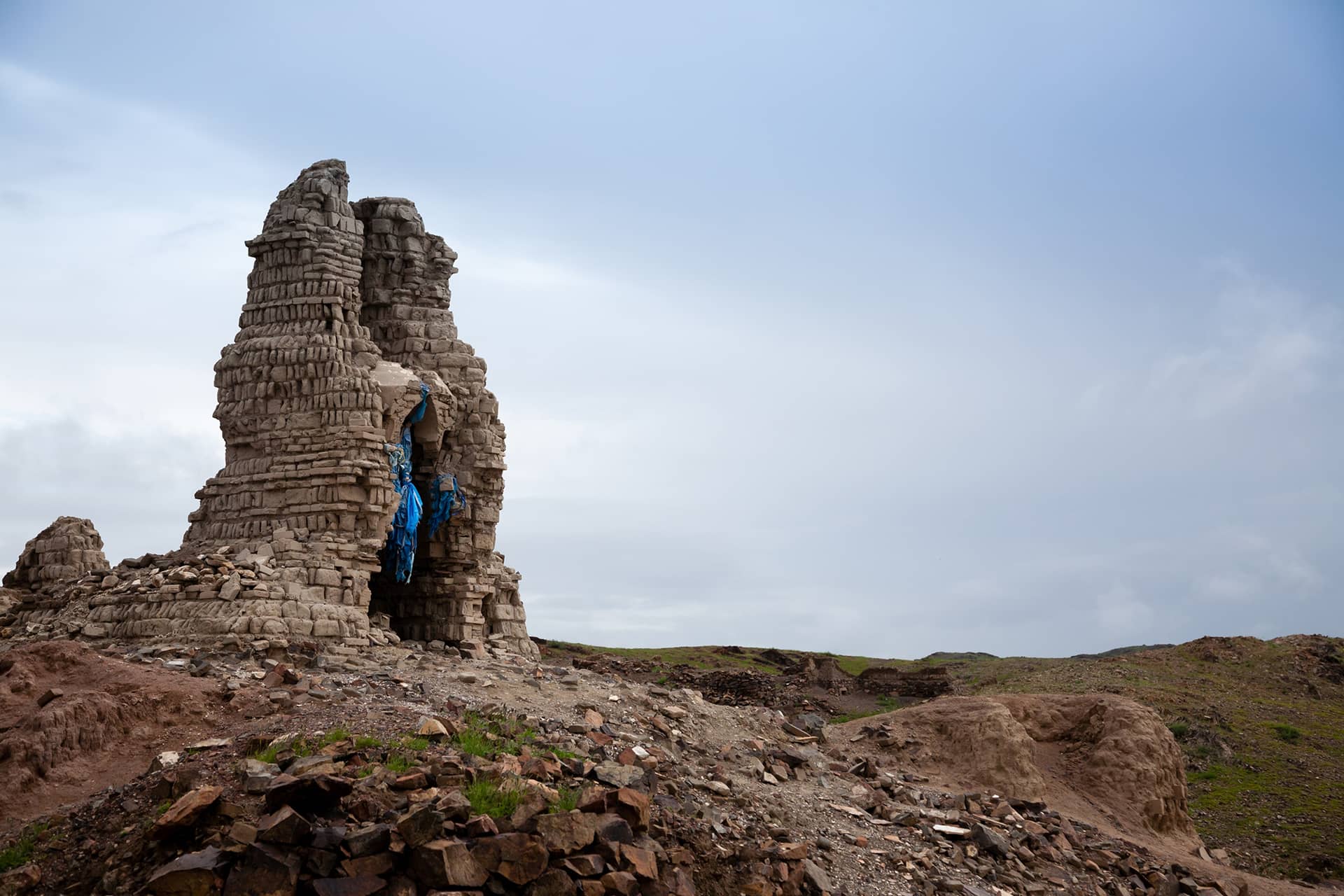
Ongi monastery ruins view, Mongolia landmark. Buddhist monastery
9. Ongi Monastery Ruins
On the banks of the Ongi River lie the remains of Ongi Monastery, once among Mongolia’s largest religious complexes. At its height in the 18th and 19th centuries, it housed hundreds of monks and dozens of temples. In the 1930s, however, it was destroyed during Stalinist purges, which targeted religious institutions across Mongolia.
Today, portions of the site have been reconstructed, with prayer wheels and restored temples standing alongside ruins. This juxtaposition offers a poignant reminder of both cultural loss and resilience. Ongi Monastery deepens an understanding of Mongolia’s Buddhist traditions and its turbulent modern history.
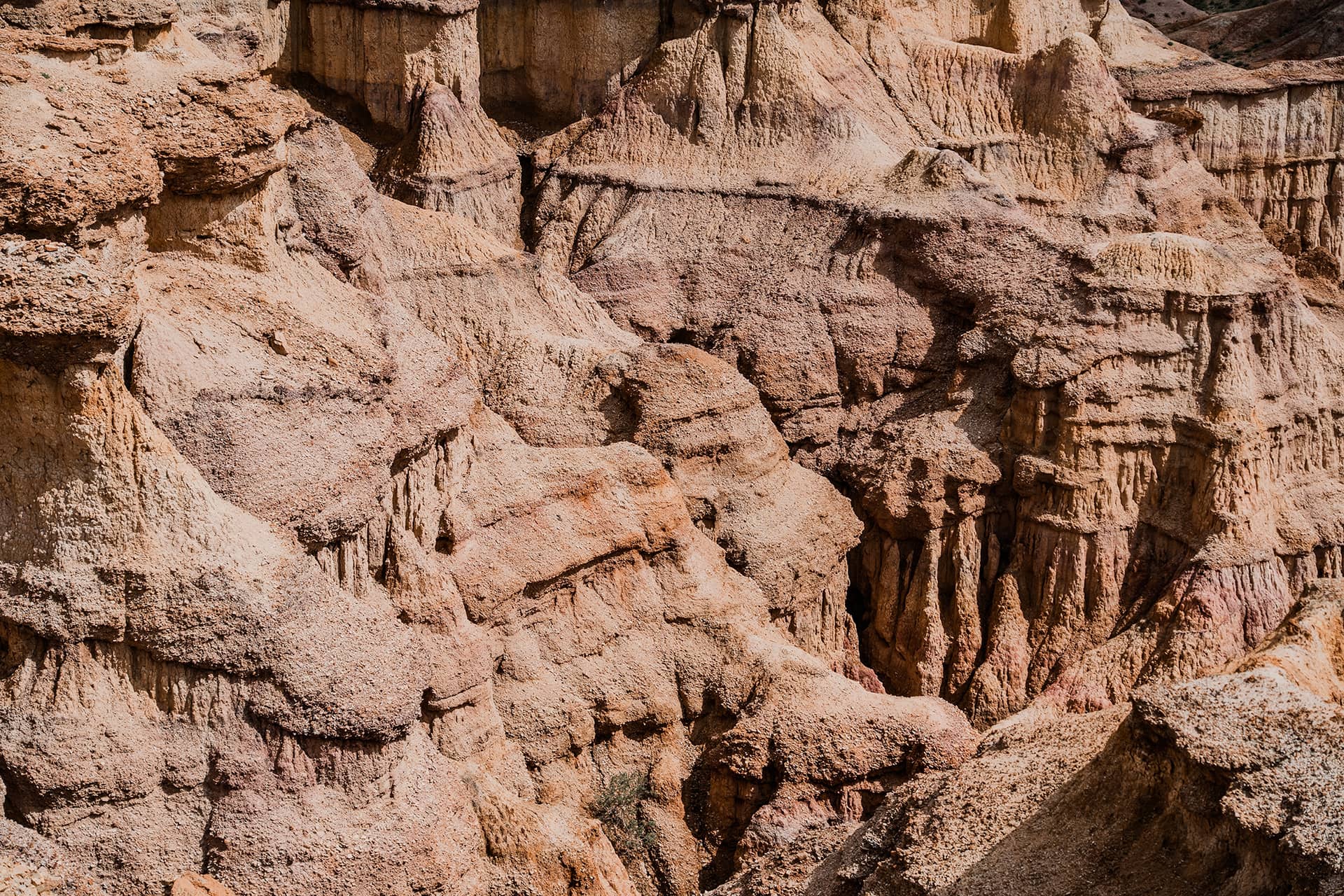
Scenic View of Tsagaan Suvarga Canyon in Gobi Desert, Mongolia
10. Tsagaan Suvarga (White Stupa)
Tsagaan Suvarga, or the White Stupa, is a striking limestone escarpment eroded over millions of years into tiered formations resembling a ruined city. The cliffs, up to 30 meters high, from afar resemble a ghostly fortress, but up close, layers of sediment reveal bands of pink, lavender, and ochre that record ancient environmental changes.
Geologists regard it as a window into past climates, with each striation marking shifts in sedimentation over millions of years. Local herders, meanwhile, interpret the formations in oral traditions as sacred or storied places.
Your Journey Through the Gobi Begins Here
The Gobi Desert is not just a landscape of silence and sand but a living archive of Earth’s history, culture, and ecology. Each landmark tells a story – whether of dinosaurs, Bronze Age artisans, resilient ecosystems, or enduring faith.
At Nomadic Expeditions, our journeys are designed to help you engage with these places in meaningful ways. Guided by experts and enriched by local partnerships, your exploration of the Gobi becomes more than travel—it becomes participation in the ongoing story of Mongolia’s land and people.
FAQs
- What is the significance of the Gobi Desert?
The Gobi Desert, the world’s sixth largest, is significant for preserving Cretaceous fossil beds, hardy ecosystems, and enduring nomadic traditions. It serves as a living laboratory for paleontology, climatology, and archaeology, making it essential to understanding Mongolia’s natural and cultural heritage. - Why are the Flaming Cliffs (Bayanzag) famous in paleontology?
The Flaming Cliffs are famous because in 1923, an expedition led by Roy Chapman Andrews discovered the first scientifically documented fossilized dinosaur eggs there. This revolutionary discovery confirmed reproductive behaviors previously unknown in dinosaurs and has made the site a cornerstone for understanding Asia’s dinosaur record. - What is unique about the ecosystem in Yol Valley (Yolyn Am)?
Yol Valley is an ecological outlier in the arid Gobi Desert. It’s a deep gorge that maintains a cool microclimate, allowing streams to flow and ice to persist even into the summer. This supports rare alpine flora like edelweiss and provides a habitat for wildlife such as the bearded vulture and Siberian ibex. - What famous fossil was discovered at Tugregiin Shiree?
Tugregiin Shiree is most famous for the extraordinary fossil of a Velociraptor and a Protoceratops locked in combat. This specimen captures a prehistoric struggle frozen in time from approximately 70 million years ago and is one of paleontology’s most compelling discoveries. - What type of ancient art can be found in Havsgait Valley?
Havsgait Valley contains one of Mongolia’s richest concentrations of prehistoric rock art. These petroglyphs date back over 8,000 years and depict ibex, wolves, hunters, and abstract motifs, offering insight into Bronze Age cosmology and rituals. - What is the historical importance of the Ongi Monastery Ruins?
The Ongi Monastery was once one of Mongolia’s largest religious complexes but was destroyed in the 1930s during Stalinist purges. Today, its ruins stand alongside reconstructed temples, serving as a poignant reminder of both Mongolia’s cultural loss and the resilience of its Buddhist traditions. - How do sites like Moltsog Els show the Gobi is a living, cultural landscape?
Moltsog Els demonstrates the deep connection between the Gobi’s environment and its people. The dunes are interspersed with vital saxaul trees that prevent desertification. Nomadic families graze their camels here and often welcome travelers into their gers, sharing traditional practices and showing that the Gobi is a lived landscape where culture and nature are intertwined.