
How India’s Landscapes Shape Its Regional Cuisines
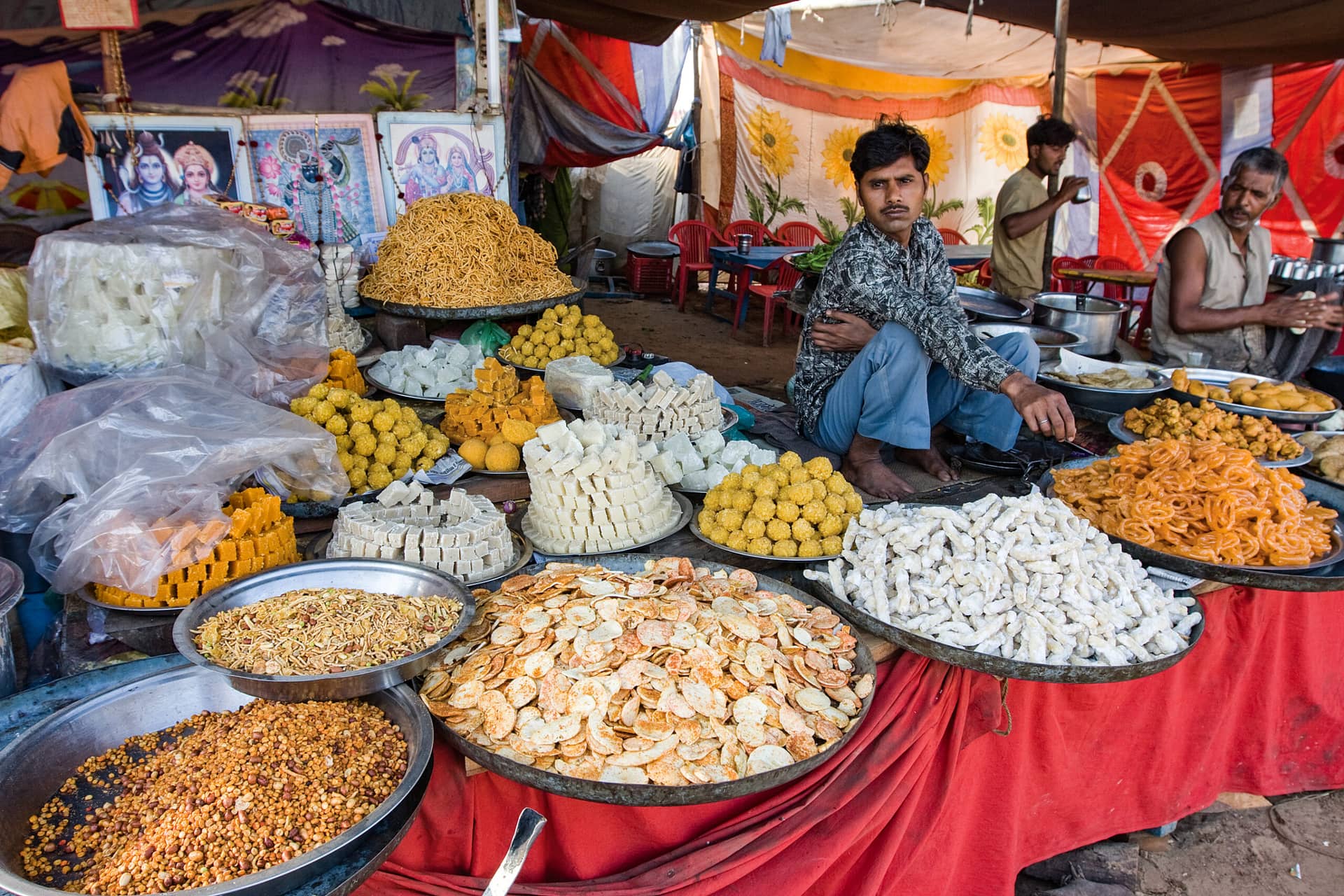
India’s food is often introduced through dishes that have become globally familiar, butter chicken, biryani, naan. But across the country, regional cooking tells a far more layered story, one shaped by altitude, climate, trade routes, migration, and local survival.
Travel through India and the cuisine changes as dramatically as the landscape itself. In Rajasthan’s desert communities, recipes evolved around scarcity and preservation. In Ladakh, meals are built for warmth during long Himalayan winters. In Kerala, coconut and cassava define everyday comfort food, while in Sikkim, fermentation remains central to mountain cooking traditions.
For travelers moving between these regions, food becomes one of the clearest ways to understand how differently people live across India. Some of the most memorable meals are not found in formal dining rooms, but in village kitchens, temple courtyards, roadside stalls, and family homes where recipes remain closely connected to place.
Rajasthan: Desert Cooking and Hidden Fires
In Rajasthan, food was shaped by heat, distance, and limited water. Many traditional dishes were designed to last, travel well, or cook with very little fuel.
One of the region’s most unusual preparations is Khad Maas, a traditional meat dish cooked underground. Goat meat is heavily marinated with spices, sealed inside a vessel, then buried beneath hot sand and embers in a pit dug into the earth. Over several hours, the trapped heat slowly cooks the meat until it becomes smoky, tender, and intensely flavorful.
The technique dates back to Rajput hunting expeditions, when food needed to cook discreetly in remote desert terrain. Even today, Khad Maas feels tied to Rajasthan’s older desert traditions, especially when served with bajra roti, raw onions, and buttermilk.
Cooked with mustard oil, garlic, cumin, and dried chilies, the dish remains deeply connected to village cooking across the Thar Desert.
Kerala and Tamil Nadu: Coconut, Firewood, and Temple Kitchens
Further south, the flavors shift completely. Coconut, curry leaves, rice, and tropical crops shape much of the cuisine, while food traditions often carry strong ties to ritual and community life.
In Kerala, Kappa Puzhukku remains one of the region’s most comforting everyday dishes. Made from boiled tapioca mashed with coconut, green chilies, curry leaves, and coconut oil, it became especially important in farming and tribal communities because cassava could grow reliably even in difficult conditions.
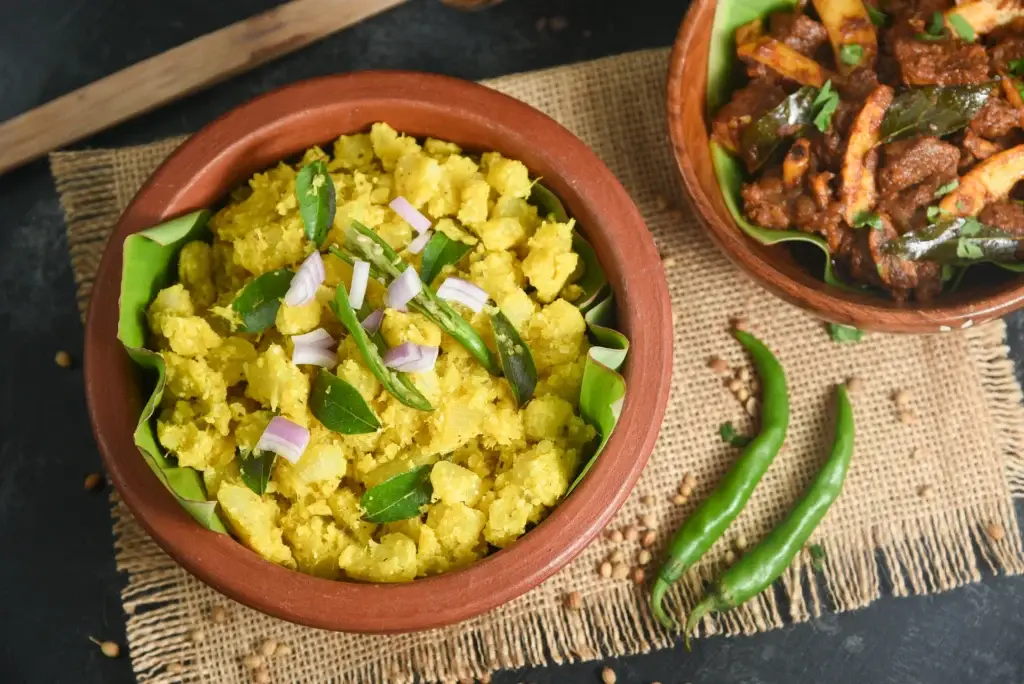
The preparation is intentionally rustic. Tapioca is hand-mashed in large vessels, leaving some texture behind, then mixed with coconut and spices while still warm. In many homes across Kerala, it is served with fish curry after long days of work in the fields.
In neighboring Tamil Nadu, food takes on a more ceremonial role inside temple kitchens. Sakkarai Pongal, a rich preparation made with rice, moong dal, jaggery, cardamom, and ghee, is one of South India’s most important temple offerings.
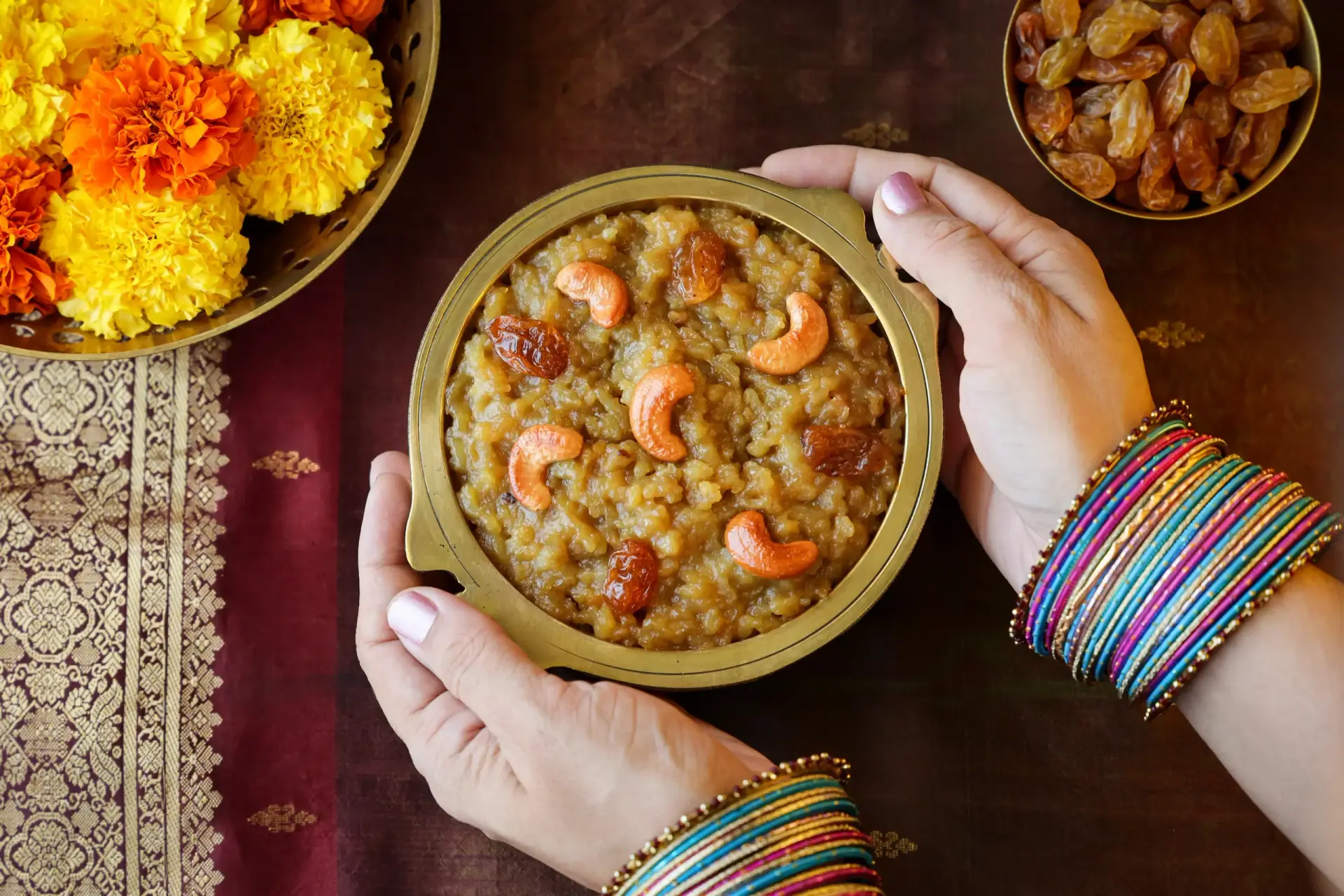
In traditional temple settings, the dish is still cooked over wood fire in large brass or bronze pots. Rice and lentils are slowly stirred with wooden paddles while jaggery melts into a deep caramel sweetness. In some temples, cooks do not taste the food during preparation because it is first intended as an offering before being shared with devotees.
The result is warm, fragrant, and deeply tied to ritual, somewhere between nourishment and tradition.
Ladakh: Comfort Food in the High Himalaya
In Ladakh, cuisine reflects life at altitude. Winters are long, temperatures drop quickly, and meals are designed to provide warmth and energy above all else.
One of the region’s defining dishes is Skyu, a thick stew filled with hand-shaped pieces of dough simmered alongside vegetables and sometimes meat.
The dough is pinched by hand into small irregular shapes before being dropped directly into the pot, where it slowly thickens the broth as it cooks. Potatoes, carrots, and turnips are common additions, while yak butter or animal fat adds richness during colder months.
Skyu is often eaten during winter evenings in large communal servings alongside salted butter tea. The flavors are mild and comforting, designed less around spice and more around warmth, texture, and sustenance.
In many ways, the dish captures the pace of life in Ladakh itself: practical, communal, and closely tied to the mountain environment.
Sikkim: Fermentation Traditions of the Eastern Himalaya
In the eastern Himalaya, fermentation plays a central role in everyday cooking. Mountain climates and long winters encouraged food traditions built around preservation, especially in rural communities.
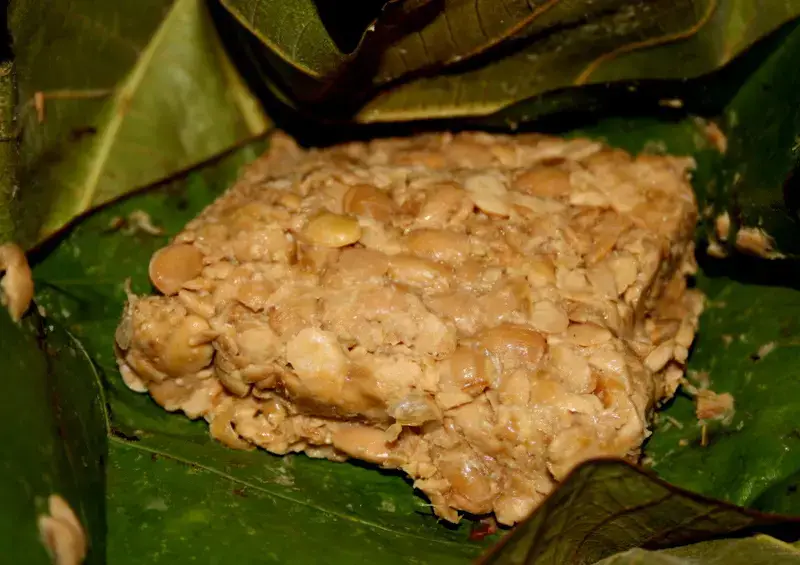
Kinema, a fermented soybean preparation common in Sikkim, is one of the region’s most distinctive foods.
Soybeans are boiled, wrapped in leaves or cloth, and left near kitchen fires for several days to ferment naturally. Over time, the beans develop a sticky texture and a strong earthy aroma that defines the dish.
Kinema is typically stir-fried with mustard oil, garlic, ginger, and chilies before being served alongside rice and vegetables. For many Himalayan households, it remains an important source of protein during colder months.
For travelers unfamiliar with fermented mountain cuisines, the flavor can be surprising at first. But like many regional dishes across India, Kinema tells a larger story about climate, resourcefulness, and traditions that continue to survive through everyday cooking.
Experiencing India Through Regional Cuisine
What makes India’s regional cuisines so compelling is not simply variety, but the way each dish remains tied to its environment.
Desert cooking in Rajasthan developed around scarcity and mobility. Temple kitchens in South India preserve ritual traditions that have endured for generations. Himalayan cuisines in Ladakh and Sikkim evolved around altitude, preservation, and long winters.
Food becomes another way of understanding place, not through famous restaurants or curated tasting menus, but through recipes, cooking methods, and local meals that continue to reflect the landscapes where they were born.
Nomadic Expeditions’ journeys through India are designed with that same perspective in mind, creating opportunities to experience the country through its regional cultures, landscapes, and everyday traditions. From Rajasthan’s desert communities to the mountain kitchens of the Himalaya, these encounters offer a deeper way of understanding India beyond its most familiar icons.