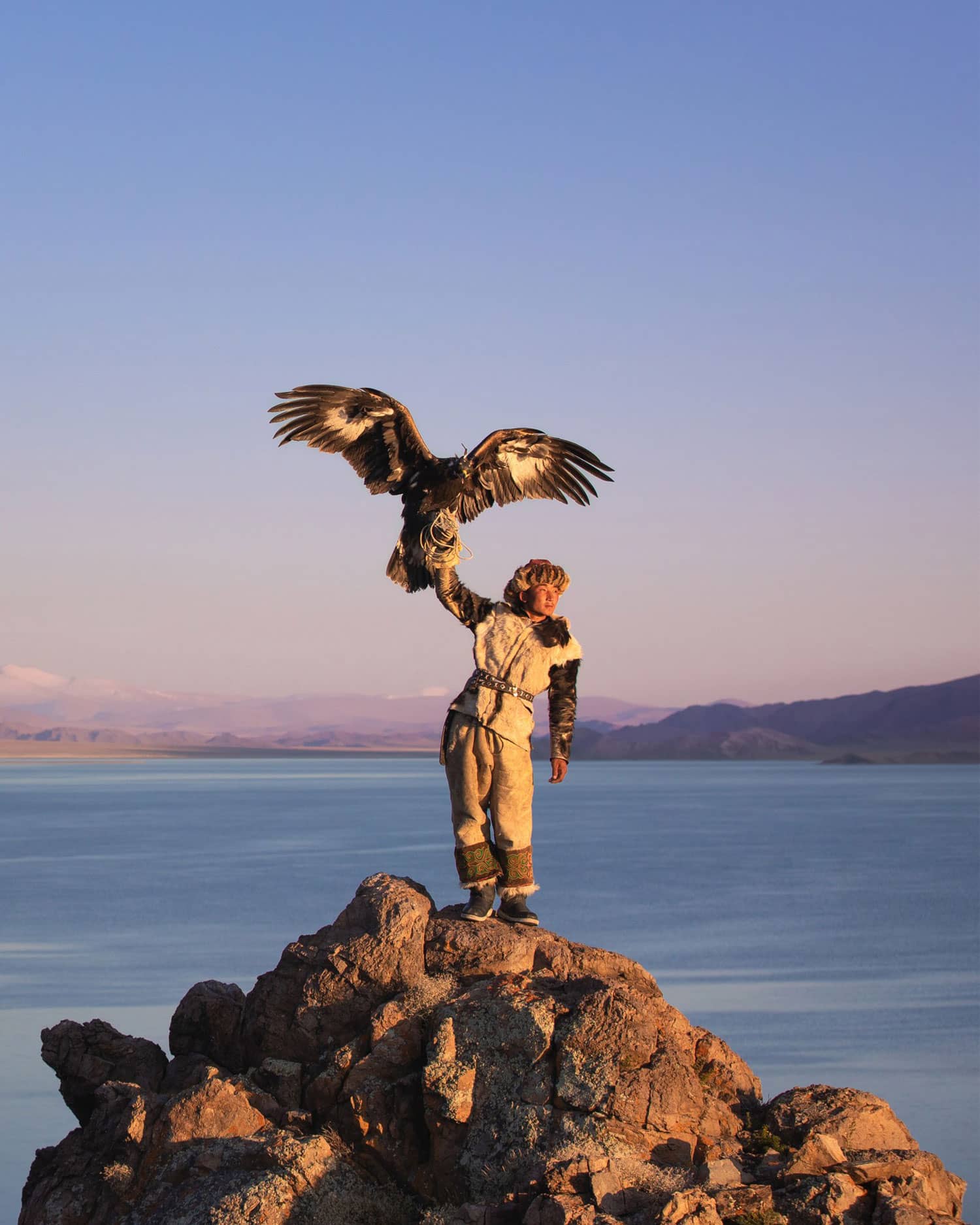

Planning a luxury vacation to Asia is one of those rare ideas that keeps getting better the more you sit with it. The region offers an incredible range of experiences, from vast desert landscapes and ancient pilgrimage routes to vibrant cities, quiet monasteries, and deeply rooted traditions that still shape daily life. It’s the kind of travel that invites curiosity and rewards thoughtful exploration.
At Nomadic Expeditions, we spend our days designing journeys across Asia that are shaped by experience, relationships, and a deep understanding of place. Over time, we’ve seen how travelers’ ideas of luxury have shifted. It’s less about labels and more about how a journey feels, who you meet along the way, and how seamlessly everything comes together. The most memorable trips tend to be the ones that are well-paced and closely aligned with what each traveler values most.
To explore what luxury travel in Asia looks like today, we sat down with members of our planning team, Asian travel experts who work across the continent every day. Their insights reflect real conversations with travelers and the practical realities of designing journeys in regions where logistics, culture, and seasonality matter.
If Asia has been on your mind, this conversation offers a clear and thoughtful look at how great journeys take shape, guided by experience and built with intention from the very start.
As Asian travel experts, how do you define luxury when designing journeys across Asia?
Sanjay: “Luxury has become a very subjective concept. In the past, it meant a Four Seasons hotel or a Michelin-starred restaurant. Today, for many travelers, luxury is simply peace and quiet. Even a remote setting, being “off the grid” without a branded hotel can feel deeply luxurious.”
Nikhita: “In Asia especially, luxury is a relative term. In Mongolia, luxury might mean having a private bathroom with you in the middle of nowhere. In India, it could mean something entirely different, like staying in a palace or a 3,000-square-foot suite. It really depends on the destination.”

As Asian travel experts, how do you help travelers understand the real cost of luxury travel in Asia today?
Sanjay: “Another important aspect of luxury is budget. Even if someone defines luxury as peace and quiet in a remote location, that experience still needs to be thoughtfully created. In many cases, there are no existing properties or restaurants, so you’re effectively setting up a private camp. That level of privacy and logistical support requires investment.”
Undraa: “There’s also a common misconception that luxury travel in Asia is inherently more affordable than elsewhere. That may have been true a decade ago, but it’s no longer the case. Today, prices in some destinations are quite comparable to what travelers might spend in Europe or even on an African safari.”
How far in advance should travelers realistically plan a luxury trip to Asia?
Sanjay: “The timeline can vary quite a bit. Across much of Asia, luxury accommodations tend to be relatively small. Even well-known brands often have just 40 to 50 rooms, unlike destinations such as the Caribbean, where large luxury resorts are more common. Because of that limited inventory, these properties can sell out quickly, so planning further in advance is usually beneficial. That said, it’s difficult to put a single timeline on every trip.”
Undraa: “It really depends on flexibility. If travelers have fixed dates or a very specific window, planning well ahead is important. But if they have flexibility, perhaps a three-month travel window and some openness around routing, accommodations, or experiences, it’s sometimes possible to plan closer to departure without compromising the quality of the journey.”
When travelers come with only a broad idea, such as culture or nature, how do you uncover what they’re really looking for?
Sanjay: “One of the first things I always ask is why. What is motivating them to think about a particular destination? If we understand their motivation, why they choose a destination or an experience, the rest becomes much clearer. For example, someone may say they want to go to India, but then the question becomes: why India, and not Sri Lanka or China, which have equally ancient histories? Often, when you ask that question, a more specific interest emerges, perhaps a fascination with a particular culture or tradition. Once we understand that, we can shape an itinerary around it. Without that deeper motivation, the journey risks becoming generic.”

What does luxury look like in Asia beyond traditional five-star hotels?
Sanjay: “When people talk about luxury in Asia, I think they often picture a five-star hotel. But in many places, that’s not really what it looks like. A lot of the time, luxury is being somewhere remote that’s been done well. At Three Camel Lodge in Mongolia, you’re in the middle of the Gobi, but you still feel comfortable and looked after. In India, places like Dera Dune are similar. It’s a small desert retreat, very quiet, very much about where you are. For me, that kind of experience feels luxurious because it’s thoughtful and it fits the setting.”
What are some behind-the-scenes experiences that travelers could never arrange on their own, but that often become the most unforgettable moments of a journey?
Sanjay: “One example that comes to mind is a client who’s traveling in January. She uses a particular Vedic chant in her yoga and meditation practice and knew it originated in Varanasi. She told us it was something she’d always wanted to understand more deeply. So we arranged a private session there, with musicians who practice this tradition, just for her. It’s not something you would ever encounter on a standard tour. But because she shared what mattered to her, we were able to build something very personal around it. That’s often where an experience shifts from being very good to something much more meaningful.”
Another example is a group traveling in Mongolia who had read about the Bankhar dog conservation project and were really drawn to it. In Ulaanbaatar, we arranged for the founder of the project to join them at their welcome dinner and talk about the work firsthand. Later, when the group arrived at Three Camel Lodge, we organized visits with families who had received the dogs. It created a sense of continuity and connection. That’s not something we include on every itinerary, but for this group, it completed the story in a very special way.”
In Tibet, there are also moments that are tied to very specific traditions. At the Jokhang Temple, there is a gilded Buddha statue that is normally covered with layers of fabric and offerings. Only on rare occasions are those removed so the statue can be fully revealed and re-gilded with gold leaf. That’s something almost no visitors ever see. Through long-standing relationships, it’s sometimes possible to arrange access at the right moment. It’s not a standard experience, and it’s not something you’d ever find described online.”
Undraa: “A lot of what falls into this category are behind-the-scenes experiences. For instance, visiting a museum after hours, or having a curator who specializes in a particular period spend time with you. In many parts of Asia, those kinds of access points simply aren’t available to the general public. The same is true for artists. There are incredible painters and sculptors working across the region who aren’t online and aren’t written about, but whose work is extraordinary. Without local relationships, travelers would never know they exist, let alone be able to meet them.”
What do first-time luxury travelers to Asia most often underestimate, and what advice would you leave them with?
Nikhita: “Sometimes the challenge is very simple. Internal flights are limited. In places like Mongolia, they don’t operate daily, and there may be only one flight a day to a popular destination.”
Sanjay: “I think flexibility is one of the biggest things travelers underestimate, especially in more adventurous or remote parts of Asia. Travel doesn’t always run like clockwork. Weather changes, flights get canceled, roads can wash out, or a city might suddenly be closed for a protest. Those things happen, and the real difference is how you respond. That’s why patience, flexibility, and a realistic budget matter. When plans shift, having the means to implement ‘Plan B’ quickly can make all the difference without compromising the experience.”
Undraa: “Another common issue is last-minute planning. There’s often an assumption that there will always be an alternative available, but that’s not always the case. In Mongolia, for example, once flight schedules are released, there may be only one flight a day, with a very limited number of seats. Those can sell out quickly, sometimes for the entire country on a given day. That’s why we often ask for passport details early. Planning ahead isn’t about rigidity, it’s about securing options before they disappear. “

Experts from Day One
If there’s one takeaway from this conversation, it’s that great travel in Asia comes down to clarity and timing. Knowing what matters to you, planning early, and leaving room for flexibility all shape how a journey unfolds.
At Nomadic Expeditions, we’ve seen how thoughtful planning opens doors that travelers wouldn’t even know to look for on their own. It’s rarely about doing more. It’s about doing the right things, in the right way, with people who understand the terrain.
If you’re starting to think seriously about a luxury trip to Asia, this is exactly the kind of conversation we love to have. Contact us today to start planning your one-of-a-kind journey.