How To Plan The Perfect Family Vacation To India
India is more than just a destination. It’s an experience that awakens the senses, deepens bonds, and creates stories that last forever. Family travel in India opens the door to moments that feel both ancient and fresh—moments that turn curiosity into connection. For families seeking something extraordinary, this country delivers in ways that are both eye-opening and heart-opening.
It’s about more than just sightseeing. Whether you’re walking through ancient forts, sipping chai with locals, or spotting tigers in the wild, every day here invites new discovery. And when you travel with a trusted guide who understands how to balance comfort and curiosity, India becomes the perfect playground for a family journey.
Travelers also often ask: Is India safe for tourists, especially families? The answer is yes. Popular regions such as Rajasthan, Kerala, and the Golden Triangle are well-prepared for international visitors, with experienced guides, reliable transportation, and welcoming accommodations. By choosing trusted operators and following simple, common-sense practices, families can explore with confidence and feel at home in the warmth of India’s communities.
From the wild to the spiritual, the sensory to the soulful, this is how India comes alive for families.

Qutub Minar (Minaret), a highest minaret in India standing 73m tall tapering tower of five-story made of red sandstone.
Explore India’s History Hands On
India’s past isn’t confined to dusty books or museum displays. It’s alive. You feel it as you explore mighty forts, walk through ancient cities, and stand where emperors once ruled.
For families, these living monuments bring history to life. Kids can imagine defending the ramparts of Mehrangarh Fort in Jodhpur, or riding elephants through Amber Fort near Jaipur. The intricate carvings, echoing halls, and sweeping views are like pages from a storybook brought into vivid reality.
In Delhi, the old and new collide. Ride a rickshaw through Chandni Chowk’s winding alleys or climb the tower of the 12th-century Qutub Minar. Nearby Agra’s Taj Mahal continues to dazzle visitors of all ages. Learning about its construction—by 20,000 artisans over 22 years—makes it more than just a photo stop. It becomes a tale of love, art, and enduring legacy.
Down south, the temples of Tamil Nadu and Karnataka offer a different lens into India’s layered history. These aren’t just spiritual sites; they’re architectural marvels. Children can count the carved deities, learn about ancient myths, or simply run their hands over centuries-old stone.
Traveling with knowledgeable guides, like those from Nomadic Expeditions, ensures that each site becomes interactive and accessible. Rather than long lectures, families receive stories, insights, and hands-on activities that make learning natural and fun.
Parent Tip: Kids often absorb more when history feels like play. Ask guides to share legends and myths rather than dates as stories tend to stick better than timelines.
Insider Tip: To avoid the biggest crowds at the Taj Mahal, visit at sunrise. The light is magical, the air is cooler, and families can enjoy the beauty of the monument before daytime groups arrive.

Beautiful beach scenery shot from Kannur Lighthouse in India, Coconut trees, and colorful beach with cloudy sky, best place to visit in Kerala.
Unique Beach Escapes
When people think of family travel in India, they often picture palaces and tigers. But India’s beaches offer another kind of magic—slower, sunnier, and perfect for unwinding together.
Kerala’s coastline is one of the best places for a family-friendly beach escape. The town of Marari is ideal for a relaxed pace, where palm-lined beaches and gentle waves offer a welcome break from fast-paced travel. Many boutique resorts here cater to families with flexible meal times, calm swimming areas, and nature-based activities like birdwatching or canoeing through backwaters.
Goa is another great option. Beyond the party reputation, there are quieter beaches like Palolem and Agonda that are perfect for families. Yoga classes, boat rides, and local markets offer plenty of ways to explore between beach days. The seafood is fresh, the sunsets are dazzling, and the atmosphere is peaceful.
The best time to visit India’s beaches is between November and March, when the weather is dry and pleasant. During this window, you can pair time on the coast with other regions like the cultural sites of Rajasthan or the tea estates of the Western Ghats.
Parent Tip: Beach resorts often provide flexible dining times and shallow, calm swimming areas, which are ideal for children adjusting to new routines.
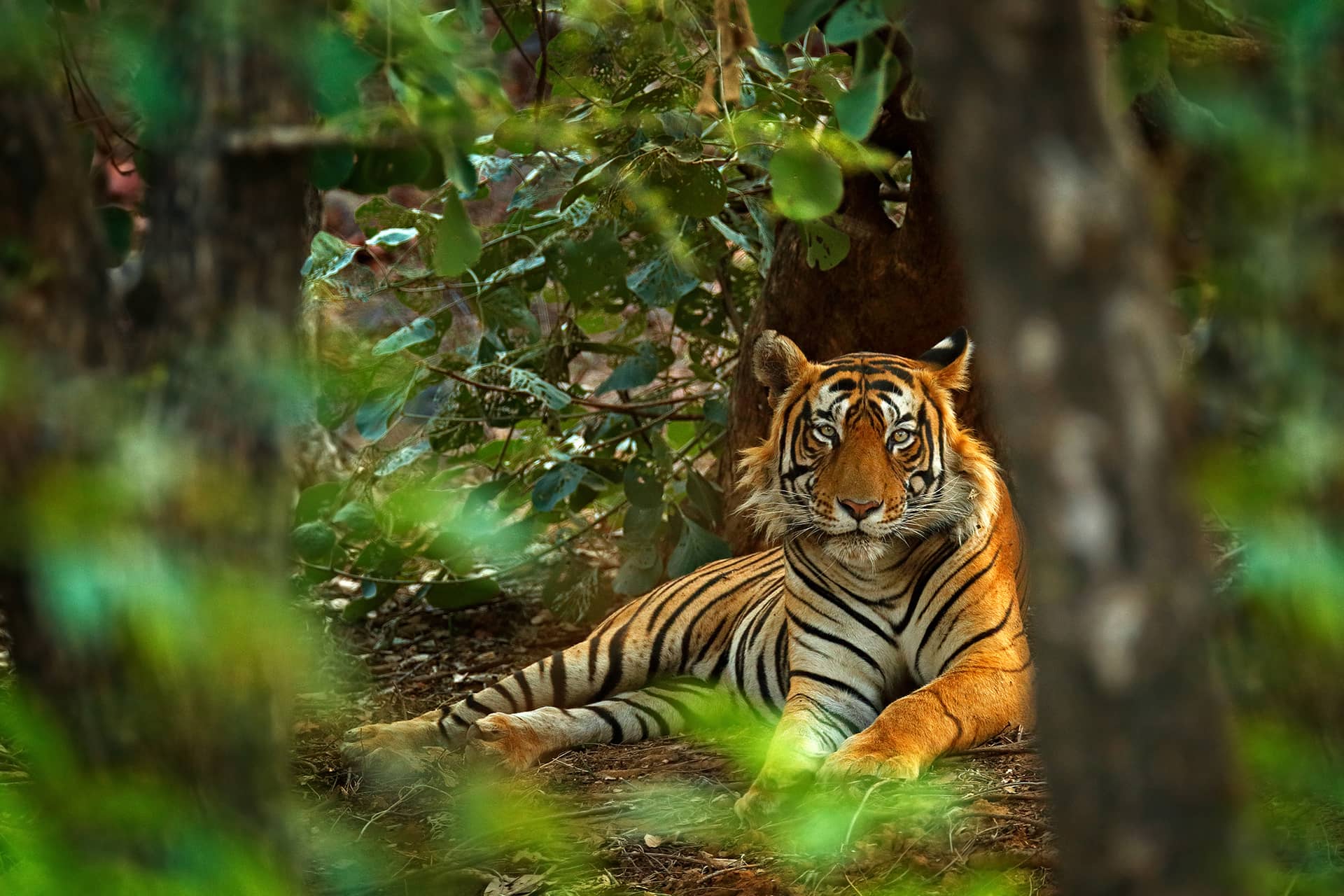
Male Indian tiger laying in a natural environment with first rain.
Wildlife Encounters for All Ages
There’s nothing quite like seeing your child spot a tiger in the wild for the first time. In India’s national parks, those magical moments happen more often than you think.
India is home to some of the world’s most exciting wildlife experiences. In the dense forests of Kanha, Bandhavgarh, and Pench, families can venture on safari to search for Bengal tigers, sloth bears, Indian elephants, and more.
Safari vehicles are open-air and guided by expert naturalists who help spot animals and interpret behavior. These guides are pros at engaging young travelers—sharing animal tracks, pointing out birds, and answering endless questions with patience and enthusiasm.
Some lodges even offer junior ranger programs. These allow kids to learn about conservation, ecology, and how to track wildlife in a fun, age-appropriate way. And after a thrilling day in the field, there’s always time to relax by the campfire, under a sky scattered with stars.
For birdwatching families, Keoladeo Ghana National Park in Rajasthan is a UNESCO World Heritage Site that draws hundreds of species, especially during the migratory season.
India’s wildlife parks are a great reminder that adventure doesn’t have to mean high adrenaline. It can mean quiet observation, shared awe, and the kind of stillness that leaves lasting impressions.
Parent Tip: Safaris are usually two to three hours long, so we recommend packing binoculars, snacks, and a favorite small toy or camera so that your kids will stay engaged.
Insider Tip: Most parks only allow visitors two drives per day—one in the morning and one in the afternoon—but a very limited number of full-day safari permits are issued. These passes give families the unique chance to stay inside the park all day, moving between different zones and maximizing chances of seeing wildlife. They’re rare, so booking well in advance through a trusted operator is essential.

Assorted Indian food on wooden table. Group of Indian food Curry, butter chicken, rice, biryani, paneer, tikka, naan, salad, dessert, chutney and spices.
Food That Feeds the Soul
Indian cuisine is colorful, diverse, and packed with flavor. For many families, food becomes one of the trip’s most surprising joys.
Forget the idea that Indian food is “too spicy.” Across regions, you’ll find a range of mild, kid-friendly dishes that are as comforting as they are flavorful. Think butter chicken, lentil dal, fluffy naan, fresh fruit juices, and sweet treats like gulab jamun or jalebi.
Markets and street food stalls can be a feast for the senses, especially when explored with a local guide who knows what’s safe and tasty. In places like Jaipur and Kochi, families can even take part in cooking classes where kids roll their own chapatis or grind spices with a mortar and pestle.
Meal times become cultural lessons. You’ll learn how southern meals are served on banana leaves, or why Ayurveda influences ingredients in many parts of the country. Sharing thalis (platters) filled with different dishes also invites kids to try new flavors in small, approachable portions.
In Ladakh, you might sip butter tea while learning about nomadic traditions. In Kerala, enjoy fish curry by the sea. Each dish tells a story, and every meal becomes part of the adventure.
The vegetarian cuisine is especially remarkable and abundant. India is largely a land of vegetarians, and as our Director of Operations and Travel Specialist, Sanjay Saxena, shared with Wendy Perrin, “Vegetables are cooked in so many different ways that you can have the same one on consecutive days and every dish will taste vastly different.” From okra curries to potato-stuffed breads, every region transforms vegetables into something new. Parents will be relieved to know that finding vegetarian meals is never an issue—nearly every restaurant, market, and roadside stall has an array of flavorful vegetarian options ready to enjoy.
Parent Tip: Don’t worry about spice levels. Most restaurants and guides are used to adjusting dishes for children. Ordering thalis—platters with small servings—lets picky eaters try new flavors without pressure.

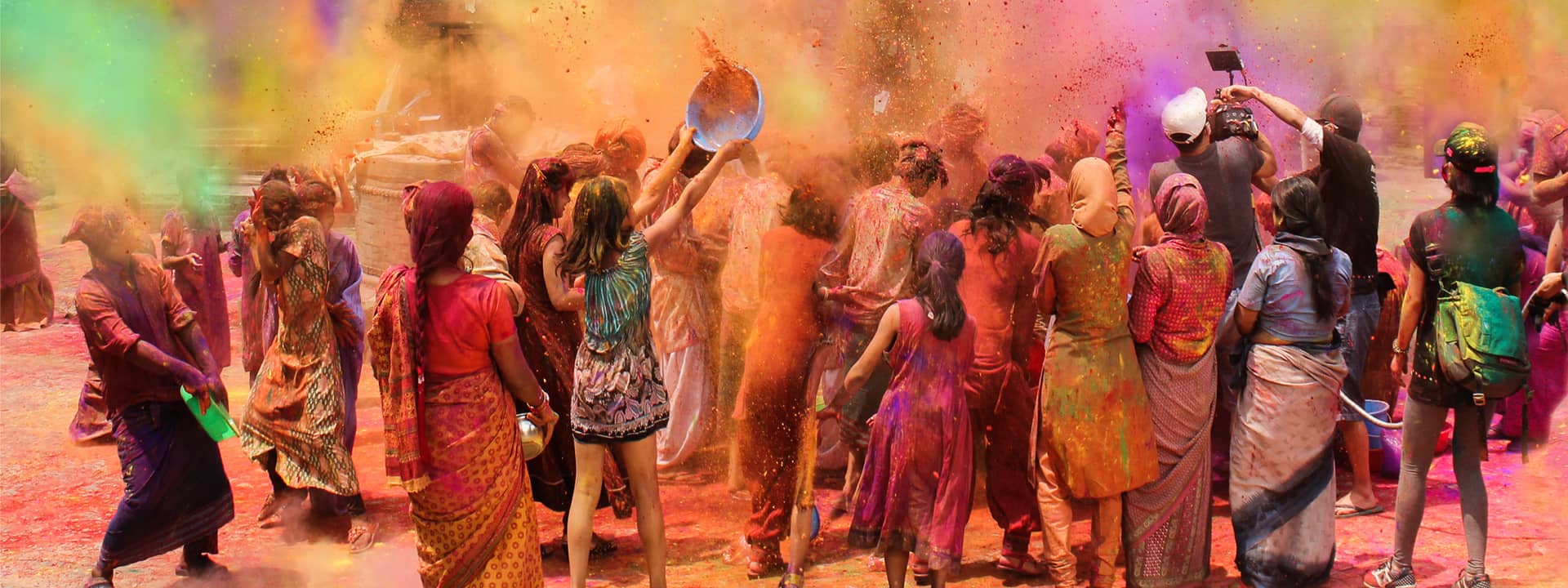
Holi festival of colors in India.
Immersive Arts and Festivals
India’s culture is a swirl of colors, music, and movement, and nowhere is this more alive than in its festivals and art forms.
Families visiting during festivals like Holi (festival of colors), Diwali (festival of lights), or Navratri can experience joy in its purest form. Whether throwing colorful powders, watching fireworks, or dancing with locals, these celebrations create lifelong memories.
But you don’t need a festival to immerse in Indian art. In Rajasthan, children can watch puppet shows or try block printing. In Kerala, take in a Kathakali performance where actors wear elaborate makeup and costumes. In Gujarat, learn how textiles are woven and dyed by hand. Many of these experiences are interactive, with artisans inviting children to try the craft themselves.
What makes these hands-on craft activities especially exciting is the chance to take your creations home. Block-printing workshops, for example, let families stamp intricate patterns onto fabric and then keep their finished pieces. Many travelers go a step further, transforming the fabric into a shirt, scarf, or other item of clothing—a wearable memory of their time in India.
India’s love of storytelling shines through every art form, from classical dance to Bollywood-style music. Workshops in drumming, painting, or henna design add another layer of participation to your trip.
These moments are what kids remember: not just what they saw, but what they did. They leave India not just as visitors, but as participants in a vibrant cultural exchange.
Parent Tip: Festivals can be crowded and loud so bring ear protection for little ones and plan to stay close to your guide for a smooth experience.
Insider Tip: For Holi, smaller towns and villages often offer the most family-friendly celebrations. Places like Vrindavan and Pushkar keep the spirit of the festival alive without the overwhelming crowds of larger cities.
Quick Tips for Parents
- Best Time to Visit: November to March offers pleasant weather across most regions and aligns with major festivals.
- Family-Friendly Regions: Rajasthan for history and culture, Kerala for beaches and backwaters, Madhya Pradesh for safaris.
- Food & Health: Stick to cooked foods and bottled water; guides will steer you toward safe local treats.
- Packing Essentials: Lightweight clothing, sun hats, child-safe insect repellent, and layers for cooler evenings in the north.
- Travel Rhythm: Alternate high-energy days (sightseeing, festivals) with slower ones (beach, resort time) to keep everyone refreshed.
- Getting Around: Private drivers and guides are the easiest way to balance comfort and flexibility with kids.
Let India Inspire Your Family
India truly is a place that stays with you long after the temples, tigers, and train rides. A journey here opens young minds, deepens connections, and invites families to see the world, and each other, with fresh eyes.
From the wilds of Ranthambore to the serenity of Kerala, from Ladakh’s soaring peaks to Tamil Nadu’s sacred spaces, family travel in India offers a rare blend of discovery and reflection. It’s an invitation to slow down, stay curious, and share in something unforgettable together.
Let us help you design a journey your family will carry for a lifetime. Contact us today to start planning your family adventure in India.