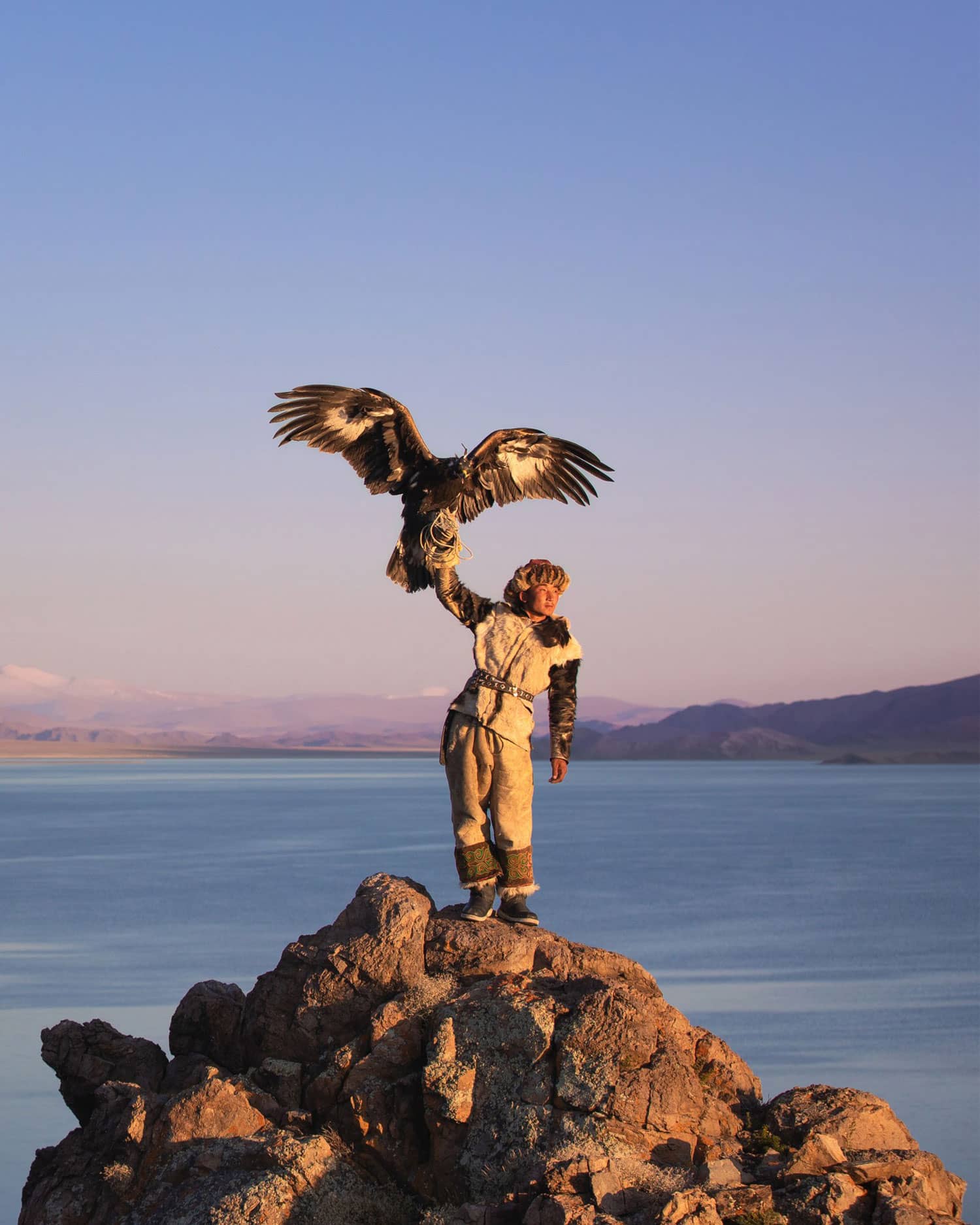

An India Travel Journey Through the Eastern Himalaya, the Northeast, and Rajasthan
There are journeys that introduce you to India, and others that change how you understand it. This India travel journey belongs firmly to the latter. It does not attempt to summarize the country or reduce it to icons. Instead, it traces a long arc across the subcontinent, allowing climate, terrain, belief, and daily life to shift gradually, sometimes imperceptibly, until you realize you are moving through entirely different worlds.
The route begins in the capital and ends in the desert, but what makes it epic is not where it starts or finishes. It is the accumulation of landscapes and lived moments in between, tea hills and monasteries, floodplains and forests, high mountain passes and river islands, villages reached on foot or horseback, places where modern life presses close and others where it barely intrudes.
Delhi, as a threshold rather than a destination
The journey opens in Delhi because it resists simplification. Old and New Delhi exist side by side, and time here is spent moving between active places of worship that reflect the city’s layered religious life, a mosque, a Sikh temple, and a Hindu temple, each encountered as part of a working city rather than as heritage alone. A rickshaw ride through Chandni Chowk places you directly into the city’s pulse, where commerce, craft, and daily routines fill narrow lanes. Quieter visits to Raj Ghat and Qutub Minar offer moments of pause, grounding the experience before the journey turns east.
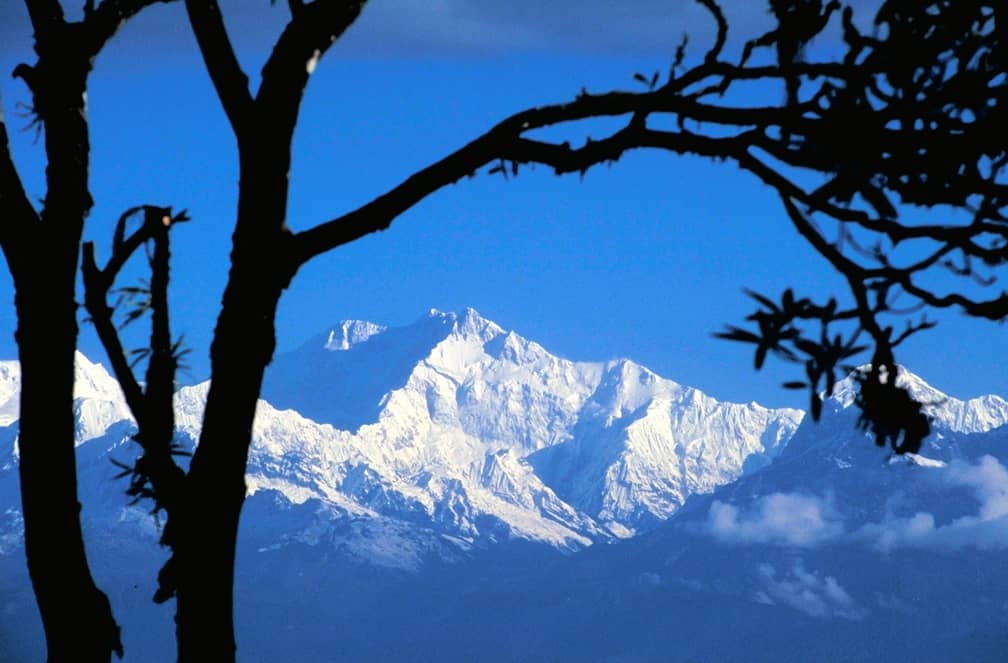
Tea hills and early mornings in the Eastern Himalaya
From the plains, the land rises quickly. In the Darjeeling hills, tea estates replace traffic, and the rhythm of the day shifts to weather and light. Staying on an estate brings tea into focus as landscape and labor rather than product. Walks through the gardens, time in the factory, and conversations around production connect the finished cup to altitude, rainfall, and human effort. Darjeeling town adds texture through Ghoom Monastery and the Himalayan Mountaineering Institute, tying spiritual life and exploration history to the surrounding peaks.
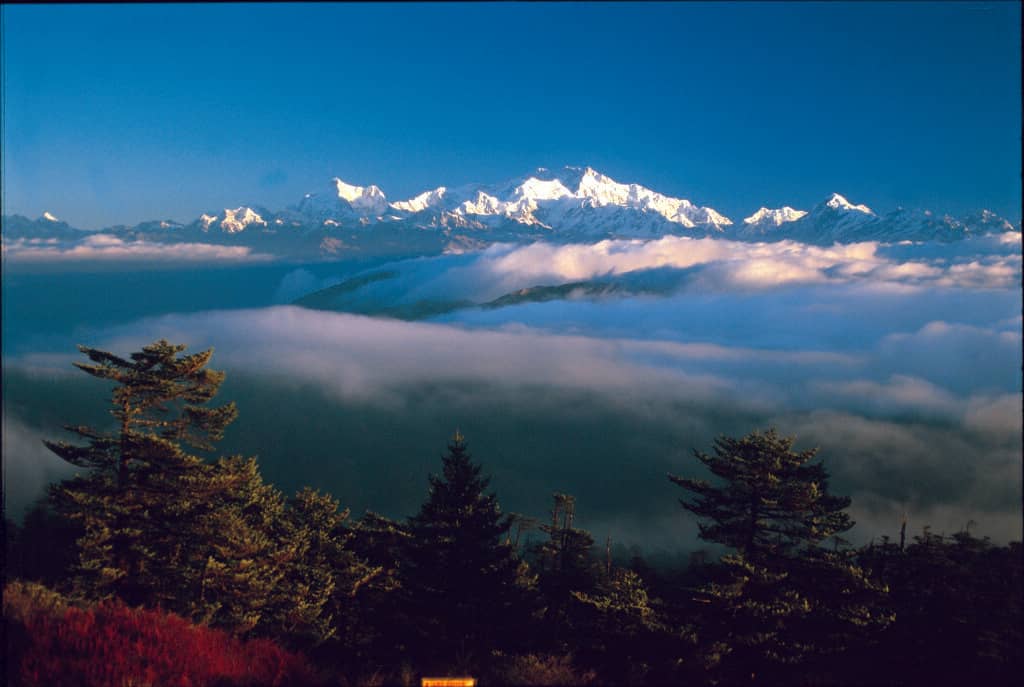 Sikkim, where belief and landscape are inseparable
Crossing into Sikkim, the journey slows further. Movement between Pelling, Yuksom, Namchi, and Gangtok is deliberate, allowing altitude and terrain toset the pace. Sacred sites such as Khecheopalri Lake are experienced as places of pilgrimage, quiet and intentional. Monasteries including Tashiding, Rumtek, and Enchey are not visited as monuments, but as living institutions where prayer and study continue daily. Time at the Namgyal Institute of Tibetology adds intellectual grounding, while a forest walk in Fambong Lho Wildlife Sanctuary brings attention back to Himalayan ecology, reminding you how closely culture and environment are linked.
From ridgelines to grasslands
The descent through Kalimpong marks a subtle shift. The air thickens, the views widen, and the land opens. By the time the journey reaches Jaldapara National Park, the Himalaya feel distant. Tall grasslands stretch toward the horizon, and wildlife moves through open country rather than forest. Game drives here are less about spectacle and more about understanding habitat, how rivers, grasses, and seasonal flooding create space for rhinos, elephants, and birdlife to persist.
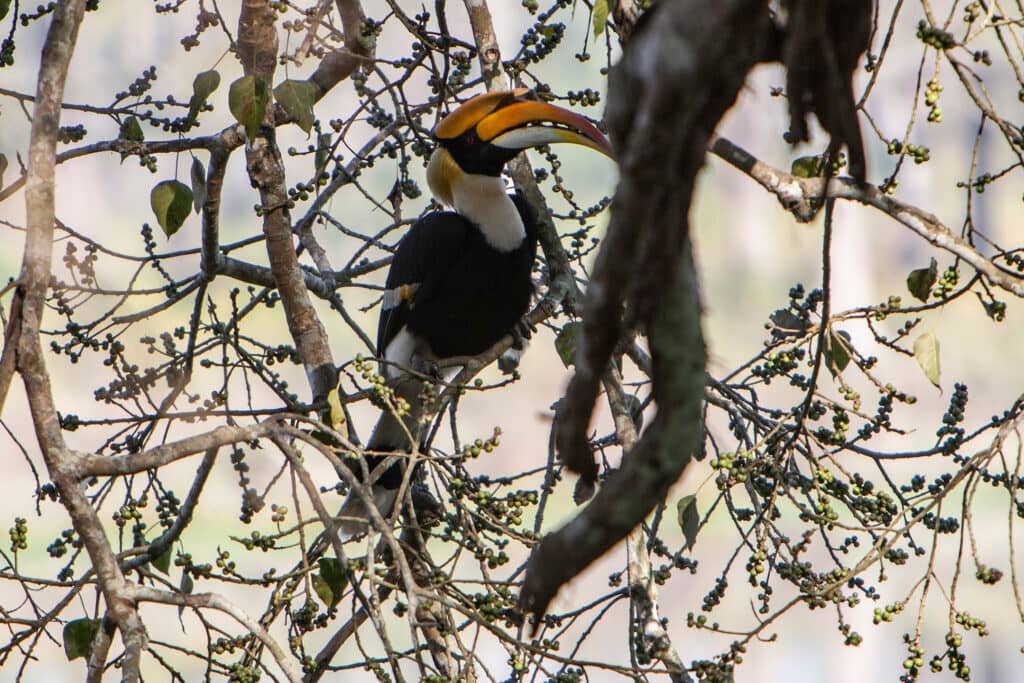
Following the rivers into Assam
In Assam, the journey begins to follow water. A visit to Sualkuchi places silk weaving in its proper context, as a living craft rooted in village economies. In Guwahati, Kamakhya Temple introduces a different spiritual register, a working pilgrimage site associated with Shakti worship, encountered with respect for its role in daily religious life. Time in Kaziranga National Park deepens the wildlife experience, with multiple drives across varied terrain revealing how the Brahmaputra floodplain supports such density and diversity of life.
Rain, roots, and walking in Meghalaya
Meghalaya shifts the experience again. Rain defines the land here, carving gorges and sustaining dense forest. The itinerary emphasizes walking, not observation from a distance. In Mawlynnong, community-led stewardship offers a model of collective responsibility, and the trek to the double-decker living root bridge makes clear that some of the region’s most remarkable structures are grown, not built. Arwah Cave adds geological depth, while time on the Umngot River reveals a clarity that feels almost unreal. Walking part of the David Scott Trail connects today’s journey to older routes of movement through the Khasi Hills, and Shillong provides a pause for cultural context through the Don Bosco Museum and local markets.
 High passes and lived borders in Arunachal Pradesh
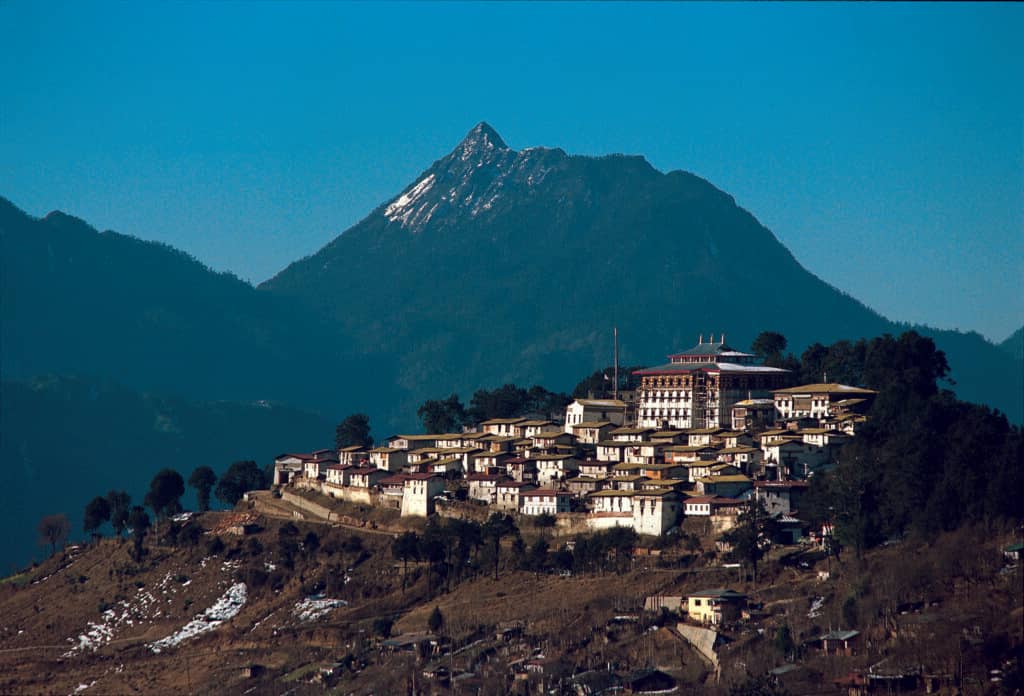
Entering Arunachal Pradesh, distance becomes part of the experience. Roads narrow, travel days lengthen, and the landscapeasserts itself. Dirang and the Sangti Valley offer a pause before higher elevations, with monasteries, orchards, and river valleys shaping daily life. Crossing Sela Pass toward Tawang, the journey moves through both dramatic terrain and modern history. Tawang Monastery stands as a working center of Buddhist learning, its presence felt in daily rhythm rather than spectacle. The return through Bomdila reinforces the realities of travel in this region, where simplicity and patience are part of the experience.
River islands and continuity in Assam
Ziro introduces a different form of intelligence, agricultural rather than monastic. Visits to Apatani villages make visible an integrated system of paddy and fish cultivation that relies on careful water management and collective practice. From here, the route returns to Assam to reach Majuli, a river island shaped by Neo-Vaishnavite traditions. Satras, devotional music, Sattriya dance, and mask-making reveal a cultural world closely tied to the rhythms of the Brahmaputra. Ferry crossings are part of the journey, reminders that water still governs movement. A visit to Sivasagar places the Ahom legacy into the broader narrative, reconnecting Northeast India to its political past.
 Nagaland and Manipur, encountered in the present tense
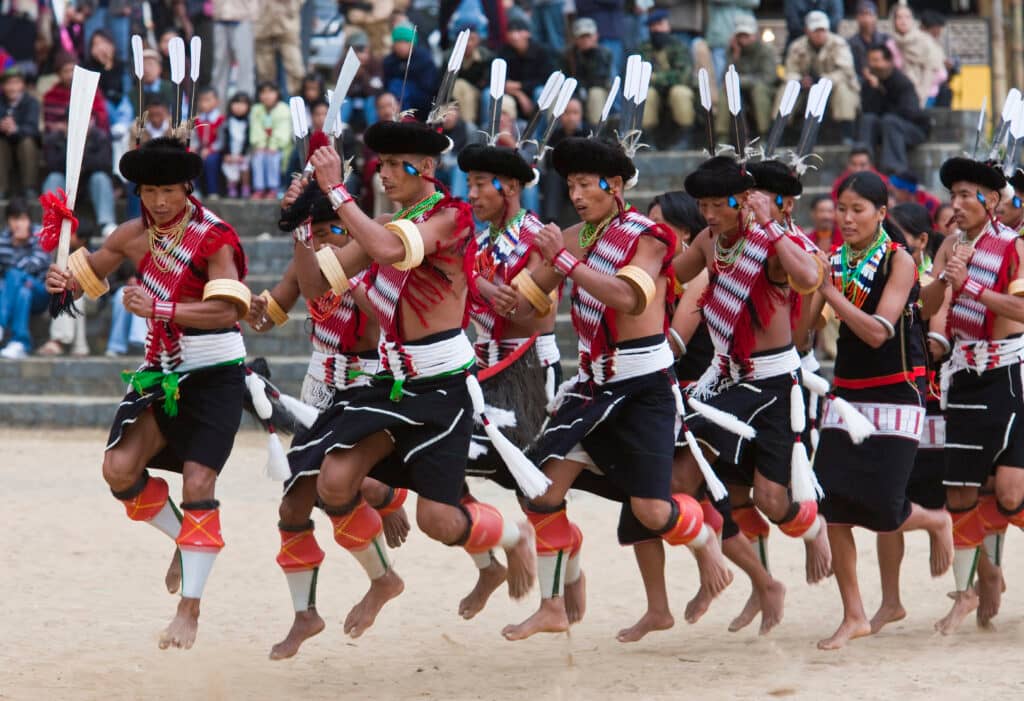
In Nagaland, village visits near Mon are framed through contemporary life rather than inherited narratives. History is acknowledged, but the emphasis remains on how communities live today. The journey continues to Mokokchung and on to Kohima, where time aligns with the Hornbill Festival, a gathering that brings Naga communities together to share music, dance, and craft as acts of continuity rather than performance. In Manipur, Imphal’s Ima market offers a powerful view of women-led commerce, while Loktak Lake and Keibul Lamjao National Park introduce a rare floating ecosystem and the endangered sangai deer. Ukhrul and Longpi add another layer, where black pottery traditions reflect material knowledge passed through generations.
Rajasthan, where the ground sets the pace
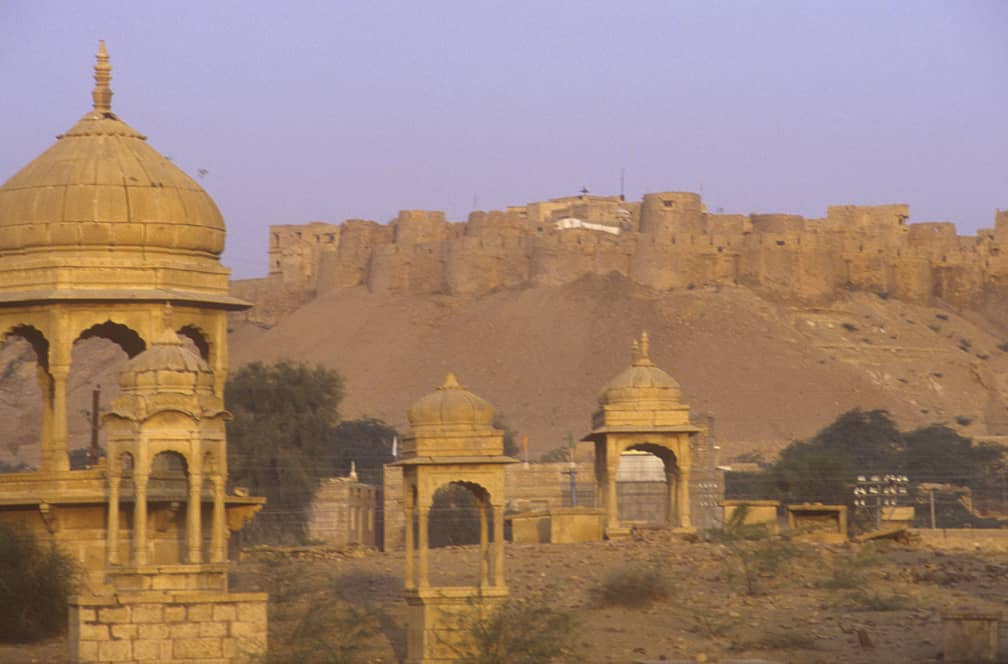
After returning to Delhi, the journey pivots west into Rajasthan, and the rhythm changes again. Jaisalmer’s living fort, carved havelis, and desert cenotaphs establish a sense of place shaped by trade and resilience. From here, the route leaves the road behind. Traveling by Marwari horse through Bishnoi villages and open desert shifts perspective entirely. Days are measured by distance covered on foot and hoof, evenings by firelight and conversation. Osian’s early temples add historical depth, and the approach to Jodhpur introduces agriculture and craft through small details rooted in the land.
Jodhpur’s Mehrangarh Fort and the blue city streets bring architecture and social history into focus before horseback travel resumes through the Aravalli foothills. Farm stays and village homes replace hotels, and the land slowly transitions from sand to rocky hills. Jawai offers a final wildlife chapter, where leopards move through a pastoral landscape shaped by coexistence. Udaipur and Jaipur close the journey with lakes, palaces, and planned cities, reintroducing urban scale after weeks spent close to the ground.
Why this India travel journey feels epic
What defines this India travel journey is not a single moment, but the way experiences layer over time. Tea hills give way to grasslands, forests to high passes, river islands to desert tracks. Prayer, craft, wildlife, and daily life are encountered where they belong, in context and at an appropriate pace. It is a route designed for travelers who want to feel how India changes, slowly and decisively, when a journey is shaped by distance rather than convenience.
For those considering a deeper exploration of India, journeys like this can be arranged privately with Nomadic Expeditions, shaped around the same depth, pace, and regional access.