Traveling to Remote Places Responsibly: What Sustainable Travel Means Today
Sustainable travel has become part of the mainstream vocabulary of tourism, yet its meaning continues to evolve. For many years, some of its most visible expressions were operational: reducing plastic, conserving water, limiting waste, or improving energy efficiency. Those practices remain essential, particularly in remote destinations where resources and infrastructure are limited. Today, the conversation also considers where tourism revenue goes, how local knowledge is represented, and whether travel can contribute to the long-term health of a destination.
These questions have particular weight in the remote regions where we have worked for more than three decades. Since Nomadic Expeditions was founded in 1992, our approach has been shaped by the places we visit and the people who know them best. Today, that extends across journeys in Mongolia, India, Tibet, Nepal, and Bhutan. We work exclusively with local guides from the countries in which our journeys take place, while long-term partnerships have connected our work with conservation and cultural initiatives. In Mongolia, Three Camel Lodge provides a particularly close view of how these ideas can become part of daily operations.
As the conversation around sustainable travel expands, many of the principles receiving greater attention across the industry are familiar to us. Our understanding of them has developed through years of working in places where the relationship between tourism, landscape, and community is especially close.
Sustainable Travel Then and Now
| Ovoo | How to Reach It | Setting | Best For |
|---|---|---|---|
| Hill above the Lodge | On foot from the Lodge, 10-minute hike | Hilltop overlooking the Lodge and open desert | Sunrise or sunset walks, first-day orientation |
| Nearby valley | Guided valley hike from the Lodge | Valley route through the surrounding hills | Guests who want a longer walk with cultural context |
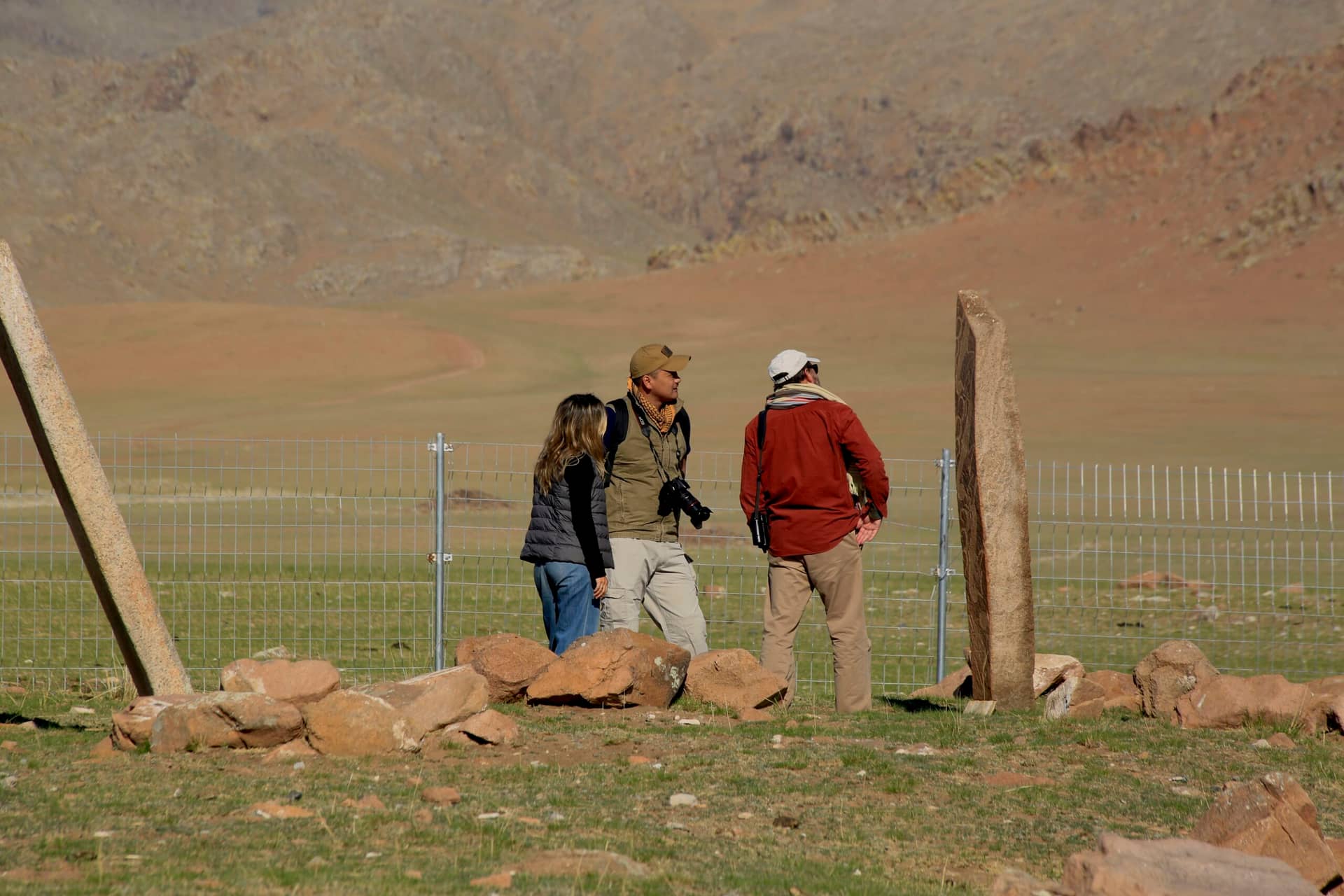
| Yol Valley (Yolyn Am) | Excursion by vehicle into Gobi Gurvan Saikhan National Park | Narrow mountain gorge, cooler and higher than the desert floor | Full-day excursions combining landscape and culture |
How Sustainable Travel Has Changed
Travelers are increasingly considering their impact beyond the immediate footprint of a trip. Booking.com’s 2025 sustainable travel research found that 93 percent of surveyed global travelers wanted to make more sustainable travel choices and had done so to some extent. In 2016, fewer than half, 42 percent, believed they were traveling more sustainably.
The newer research also reflects a change in how travelers think about responsibility. In 2025, 53 percent said they were conscious of tourism’s effects on local communities as well as the environment, while 73 percent wanted the money they spent while traveling to return to local communities. Sustainable travel increasingly considers livelihoods and the future of a destination alongside more familiar environmental concerns.
The Global Sustainable Tourism Council’s industry criteria reflect a similarly broad view, addressing local employment, community support, cultural heritage, and environmental impacts within the same framework. The details vary considerably from one destination to another, but the underlying question is consistent: how does tourism participate in the life of a place?
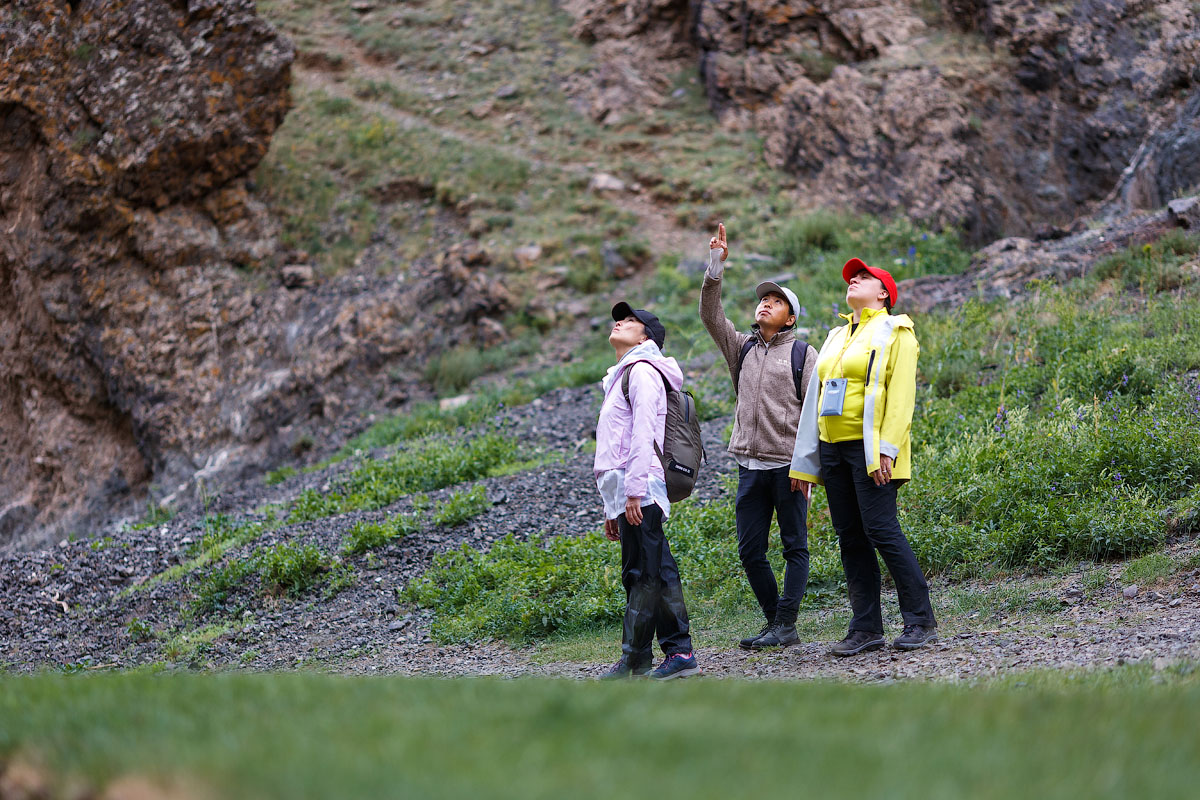
For us, one answer begins with local expertise. Across Mongolia, India, Tibet, Nepal, and Bhutan, we exclusively work with guides from the countries our travelers are visiting. Outside Mongolia, we also work with locally owned operators and properties that share our commitment to protecting natural and cultural heritage.
A guide shapes much of how a traveler comes to understand a landscape or community. In remote regions especially, local knowledge can provide context that extends beyond the itinerary itself, from appropriate behavior at a sacred site to an understanding of how seasonal changes affect everyday life. Keeping that role in local hands also keeps an important part of the tourism economy within the destination.
Meet Our Local Leaders: Read about our Tour Leaders and the expertise they bring to every journey.
Why Sustainable Travel Depends on Conservation Partnerships
Travel companies can make their own operations more responsible, but many conservation challenges require knowledge and resources beyond the travel sector. Partnerships allow tourism to work alongside organizations and communities already engaged in that work.
This approach has gained wider attention within the industry. The Nature Positive Tourism Partnership, formed by the World Travel & Tourism Council, UN Tourism, and the World Sustainable Hospitality Alliance, encourages tourism businesses to understand their effects on biodiversity and support the protection and restoration of nature within the destinations where they operate.
In Mongolia, some of our longstanding relationships offer examples of how that collaboration can take shape.
Bankhar Dogs and Pastoral Livelihoods
Across the Mongolian steppe, herding families share their landscapes with wolves, snow leopards, and other predators. Livestock losses can threaten household livelihoods and contribute to conflict between herders and wildlife.
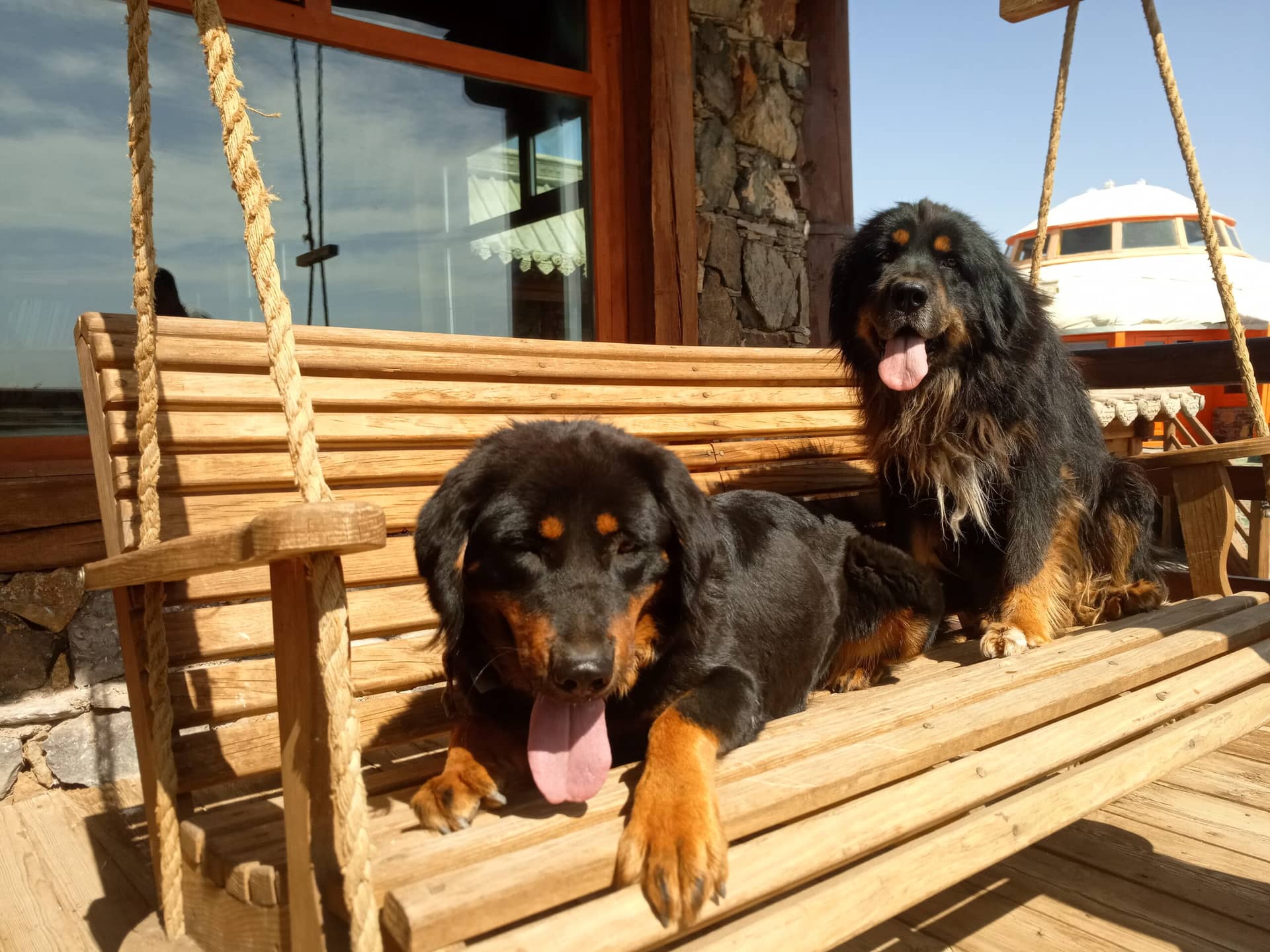
The Mongolian Bankhar Dog Project approaches that challenge through an ancient Mongolian livestock guardian breed. The organization breeds and trains Bankhar dogs before placing them with nomadic herding families, where they protect livestock from predators. The project reports that livestock protection dogs can reduce livestock depredation by 80 to 100 percent, decreasing the need for lethal predator control.
At Three Camel Lodge, our relationship with the project has developed over a number of years. It began with Barbuus, a Bankhar brought to the Lodge in 2016, and expanded into an on-site breeding program in 2019. Puppies born through the program have since been placed with nearby herding families. By 2026, the program had grown to sixteen puppies from three breeding pairs, its largest number to date.
The dogs become part of the working pastoral landscape. For herding families, they provide protection for livestock. Their presence can also reduce pressure on predators, connecting the continuation of an old pastoral practice with contemporary conservation work.
Golden Eagles, Research, and Cultural Continuity
In western Mongolia, our work with golden eagles has developed at the intersection of wildlife research and a living cultural tradition.
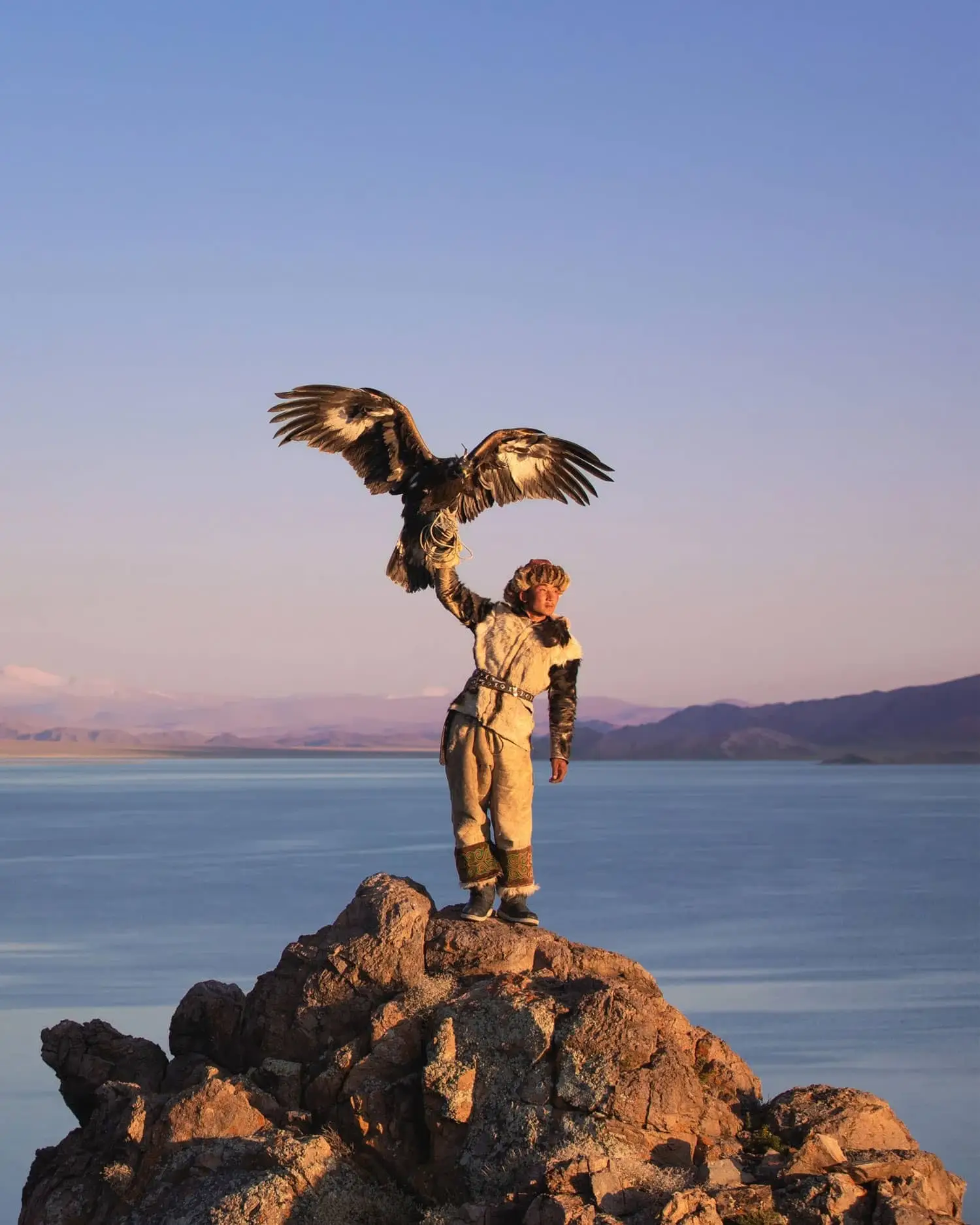
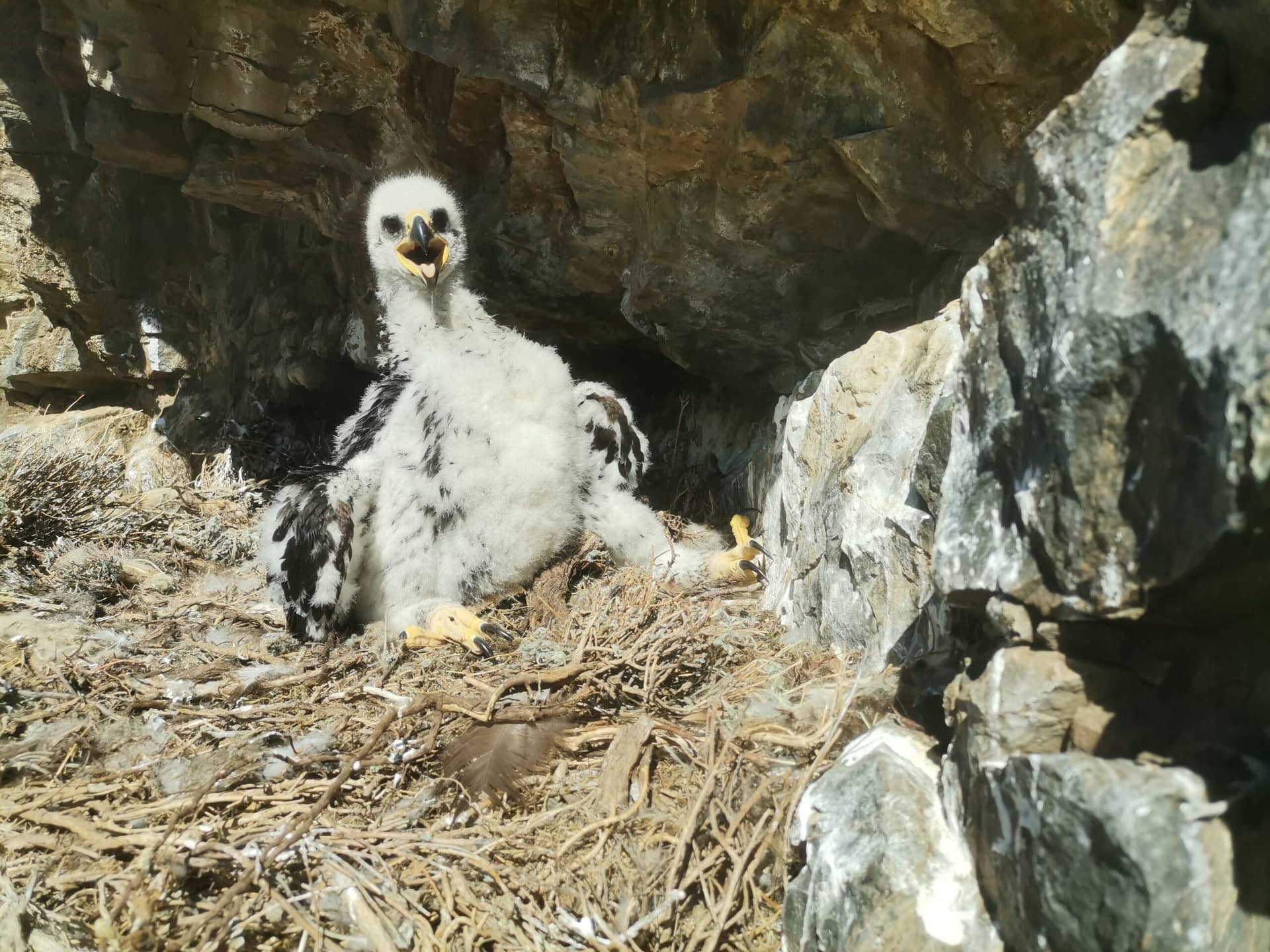
Our founder, Jalsa Urubshurow, co-founded Mongolia’s Golden Eagle Festival with local Kazakh eagle hunters in 1999. In 2020, Nomadic Expeditions funded a research initiative led by the Wildlife Science and Conservation Center of Mongolia in partnership with The Peregrine Fund. The project was established to study golden eagle populations in western Mongolia while also examining eagle hunting practices and animal welfare. The Peregrine Fund provides additional background on the research and partnership here.
The work has included surveying wild nests, measuring chicks, registering captive eagles, and engaging with eagle hunters. More recently, the Eagle Hunter Cultural Center in Bayan-Ölgii has created a year-round place where members of the community can gather and visitors can learn more about a tradition that remains part of Kazakh cultural life.
Wildlife conservation and cultural preservation raise different questions here, but both are connected to the same landscape. The people who have practiced eagle hunting across generations remain central to understanding how that relationship continues.
Cultural Preservation Is Part of Sustainable Travel
The preservation of a destination also includes the knowledge and traditions carried by the people who live there. For cultural practices to remain active, younger generations need opportunities to learn them and make them part of their own lives.
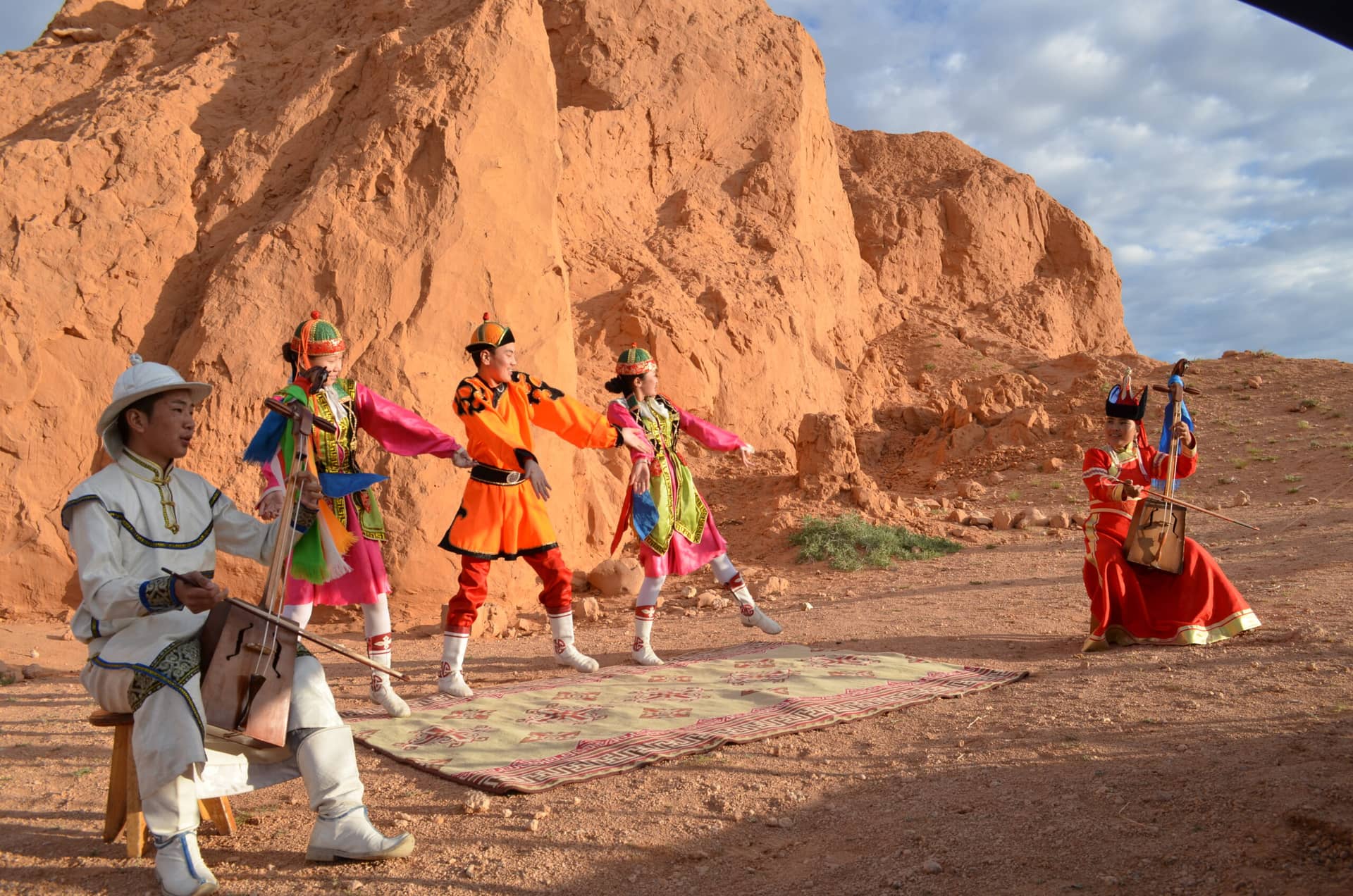
Since 2008, Nomadic Expeditions and Three Camel Lodge have worked with the Khankhongor School in the South Gobi to support its music and performing arts education. The relationship has included scholarships, musical instruments, supplies, and opportunities for students to perform for guests at Three Camel Lodge. Students have also had opportunities to perform internationally, while university scholarships have supported graduates pursuing further education in music and the performing arts.
For our travelers, these performances offer an introduction to Mongolian music through young people who are actively studying it. For the students, the work belongs to a much longer process of learning and carrying cultural knowledge forward.
Our longstanding relationship with the Arts Council of Mongolia reflects another part of that work. More recently, the Avdar Artist Residency at Three Camel Lodge has created space for contemporary Mongolian artists to work in the Gobi and engage with travelers. Mongolia’s cultural heritage continues through inherited traditions, while contemporary artists contribute to how the country understands and expresses itself today.
Local Knowledge at the Center of the Journey
Our commitment to local guides across every country we serve is part of a wider effort to keep tourism connected to the places where it operates. At Three Camel Lodge, the same principle can be seen in employment and relationships throughout the surrounding region.
Approximately 37 percent of the Lodge’s workforce comes from the local area. Nine local employees hold full-time positions and continue receiving salaries throughout the year, even though the Lodge itself operates seasonally. We also work with approximately 66 local drivers, with experienced drivers helping train newer members of the network.
That local network extends beyond direct employment. More than half of Three Camel Lodge’s supplies and services are sourced within approximately 50 miles whenever possible. We work with local herders and craftspeople, while community members provide experiences including horse and camel riding. Local artisans can also sell handmade work through the Lodge gift shop without an additional commission added to the prices they set.
These relationships keep tourism connected to the economy and knowledge of the region. They also give travelers a better understanding of a place because the people introducing it are participants in its contemporary life.
What Sustainable Travel Looks Like in the Gobi
The Gobi also illustrates why sustainability in remote destinations rarely has simple solutions. There is no extensive municipal recycling system outside the Lodge gates. Water requires careful management, and supplies that cannot be sourced nearby may travel significant distances. Infrastructure that would be routine in a city requires a different approach in the desert.
We began eliminating single-use plastic water bottles at Three Camel Lodge in 2015 and extended that practice across Nomadic Expeditions tours in 2018. Guests now use reusable metal bottles and filtered drinking-water stations. Waste at the Lodge is separated into streams including glass, paper, cans, plastics, and organic material, although limited recycling infrastructure in the Gobi means some recyclable materials must travel to Ulaanbaatar for processing. Glass bottles are crushed and reused in Lodge construction and infrastructure projects where possible.
Water management carries an additional community dimension. One of our wells is reserved for surrounding herder families and remains accessible throughout the year. Depending on seasonal conditions and pastoral movements, approximately five to ten households use it to provide water for an estimated 6,000 to 12,000 livestock.
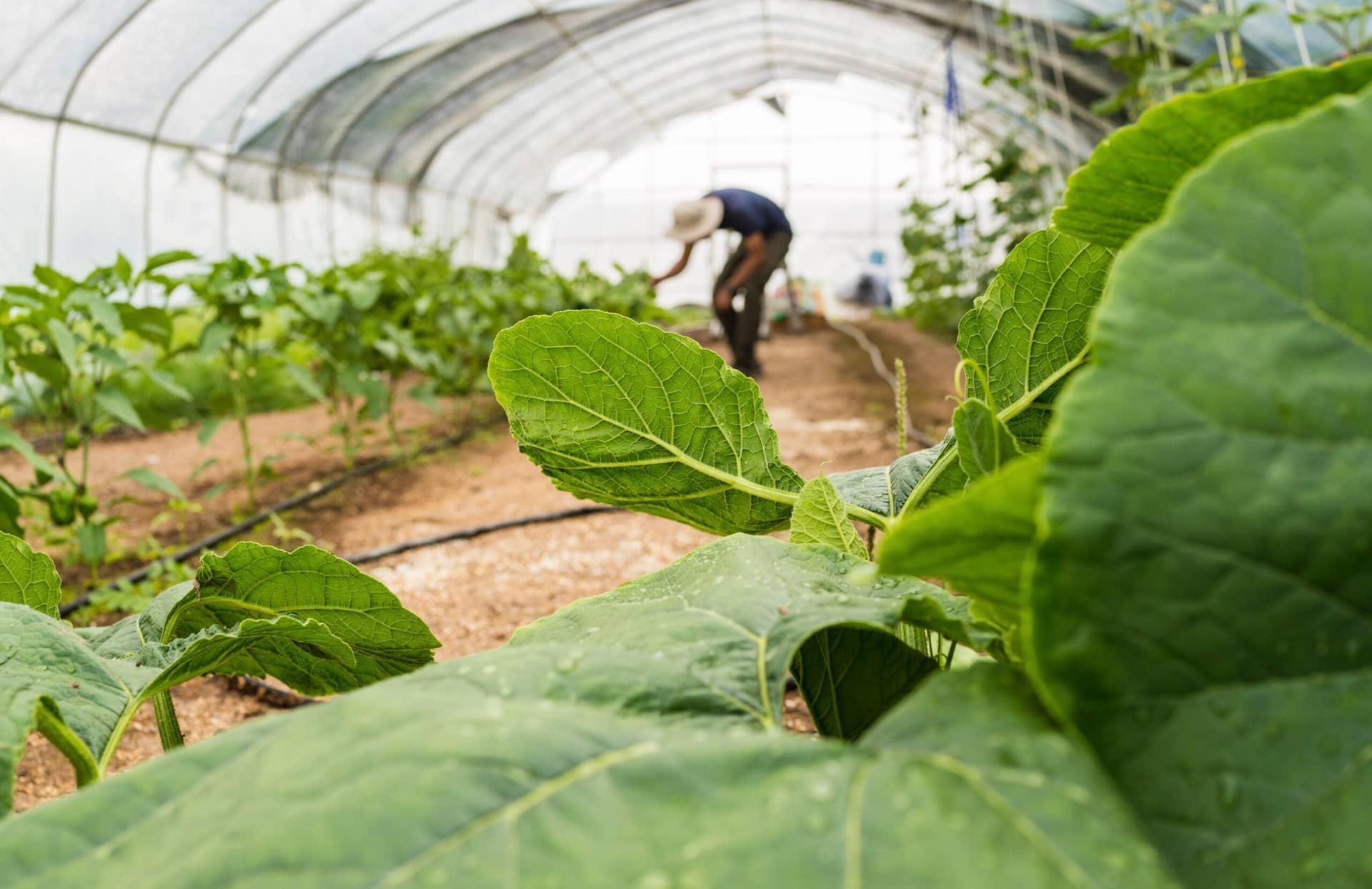
Food sourcing follows the conditions of the region as well. Our on-site greenhouse produces vegetables and herbs and currently accounts for roughly 10 percent of the Lodge’s food needs, while other ingredients are purchased locally when availability allows. Our existing solar system powers lighting and reduces our reliability on external energy sources, and plans documented in 2026 call for a larger solar installation as part of the Lodge’s longer-term renewable energy plans.
These systems continue to develop as we learn what works within the realities of the Gobi. Sustainable operations here are shaped by the same conditions that shape life throughout the region: distance, seasonality, available resources, and the needs of the communities living nearby.
Sustainable Travel Is Built Through Relationships
The travel industry’s understanding of sustainability will continue to develop. Current work around nature-positive tourism is placing greater attention on biodiversity and destination-level conservation, while research into traveler behavior shows increasing concern for how communities participate in tourism’s benefits.
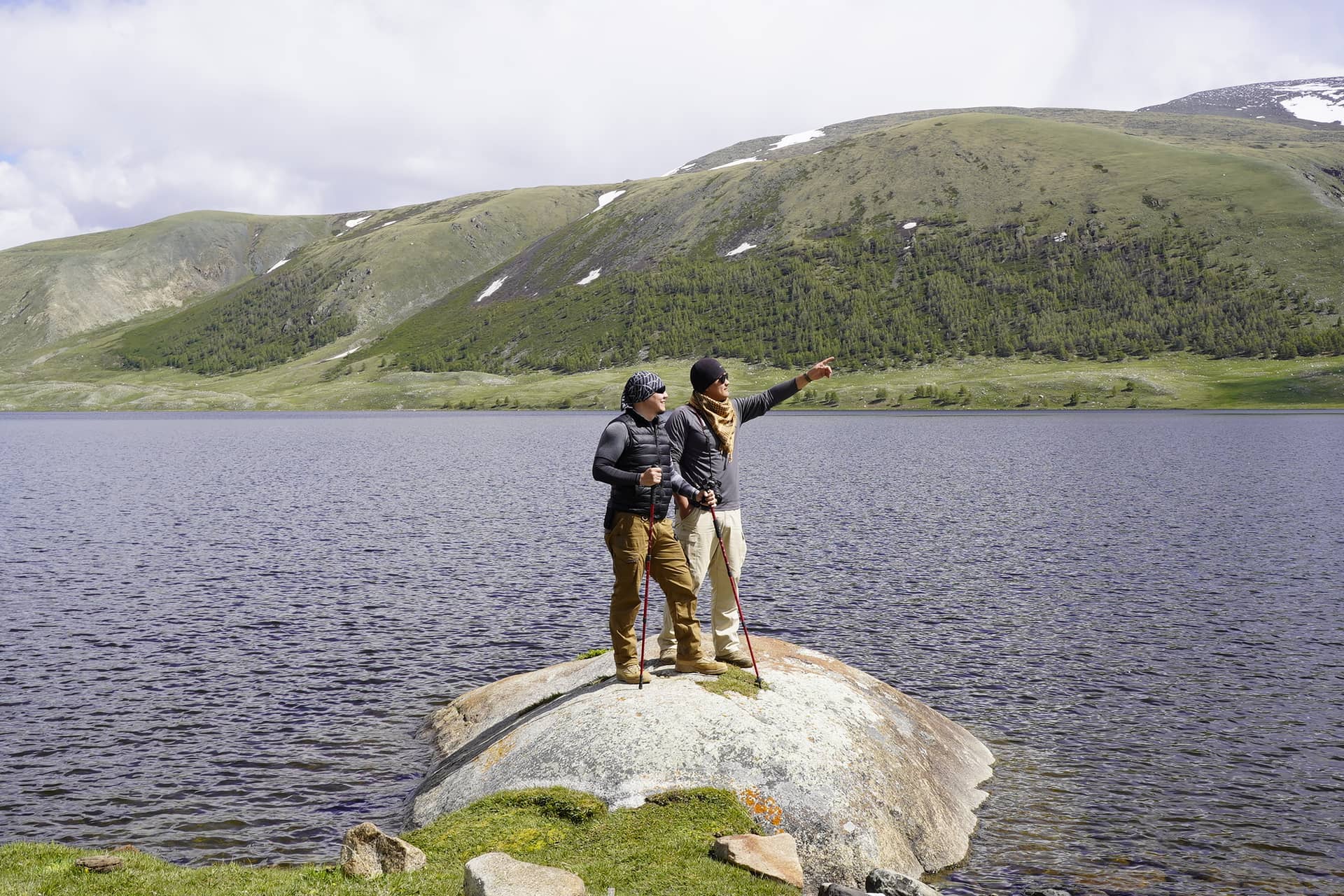
Our own understanding has developed through more than three decades of working in remote regions. Much of what we have learned comes from relationships maintained over years: with guides who share their countries with our travelers, with herding communities whose lives remain closely connected to the landscape, and with conservation and cultural organizations whose expertise has helped shape our work.
Travel inevitably becomes part of the places it enters. For us, sustainable travel means remaining attentive to that relationship and continuing to ask how tourism can contribute responsibly to the landscapes and communities that make each journey possible. That question has shaped much of our work since 1992, and it continues to guide where we go from here.
Frequently Asked Questions About Sustainable Travel
What is sustainable travel?
Sustainable travel reduces tourism’s environmental impact while making sure local communities benefit. Today it also covers where tourism revenue goes, how local culture is represented, and whether travel supports the long-term health of a destination.
How can I travel more sustainably to remote destinations?
Choose operators that hire local guides, source locally, and partner with conservation and community organizations. Carry a reusable water bottle, respect local customs at sacred sites, and buy directly from local artisans.
Why do local guides matter for sustainable tourism?
Local guides keep tourism income in the destination and give travelers context only someone from that place can provide. Nomadic Expeditions works exclusively with local guides in Mongolia, India, Tibet, Nepal, and Bhutan.
Is Mongolia a sustainable travel destination?
It can be, with the right operator. At Three Camel Lodge, single-use plastic bottles have been phased out since 2015, about 37 percent of staff come from the local area, and a lodge well supplies water to nearby herder families year-round.
What is nature-positive tourism?
Nature-positive tourism goes beyond reducing harm. It asks tourism businesses to understand their effect on biodiversity and help protect and restore nature in the places they operate.
Ready to Travel Responsibly to Remote Asia?
Explore journeys to Mongolia, Bhutan, Nepal, Tibet, and India, led by local guides and built on more than three decades of community partnerships. Or design a custom journey with our travel experts.