Traveling to India: 5 Famous Sights with Stories You’ll Never Forget
If you have been dreaming of traveling to India, certain images may already live in your mind: the Taj Mahal glowing at sunrise, Jaipur’s rosy palaces, or the sacred steps of Varanasi along the Ganges. These iconic sights are some of the most recognized in the world, yet the real magic of India often lies in the details you only notice once you’re standing there.
The country is vast, layered, and endlessly surprising. A single day might take you from the hush of an ancient temple to the swirl of a lively street market. These places are not just historic stops. They are part of daily life, filled with moments that make your trip feel personal. The smell of chai brewing nearby. The hum of conversation in a crowded courtyard. The warm nod from a local who notices you admiring their city.
Visiting these landmarks is about more than collecting photographs. It is about knowing where to stand for the best view, which time of day turns the light into gold, or how to pause long enough to watch life unfolding around you.
Below, you will find five of India’s most famous sights, each with a few tips for how to experience them in a way that feels richer and more memorable. Because while the postcard version is beautiful, the version you will carry home will be entirely your own.
Taj Mahal
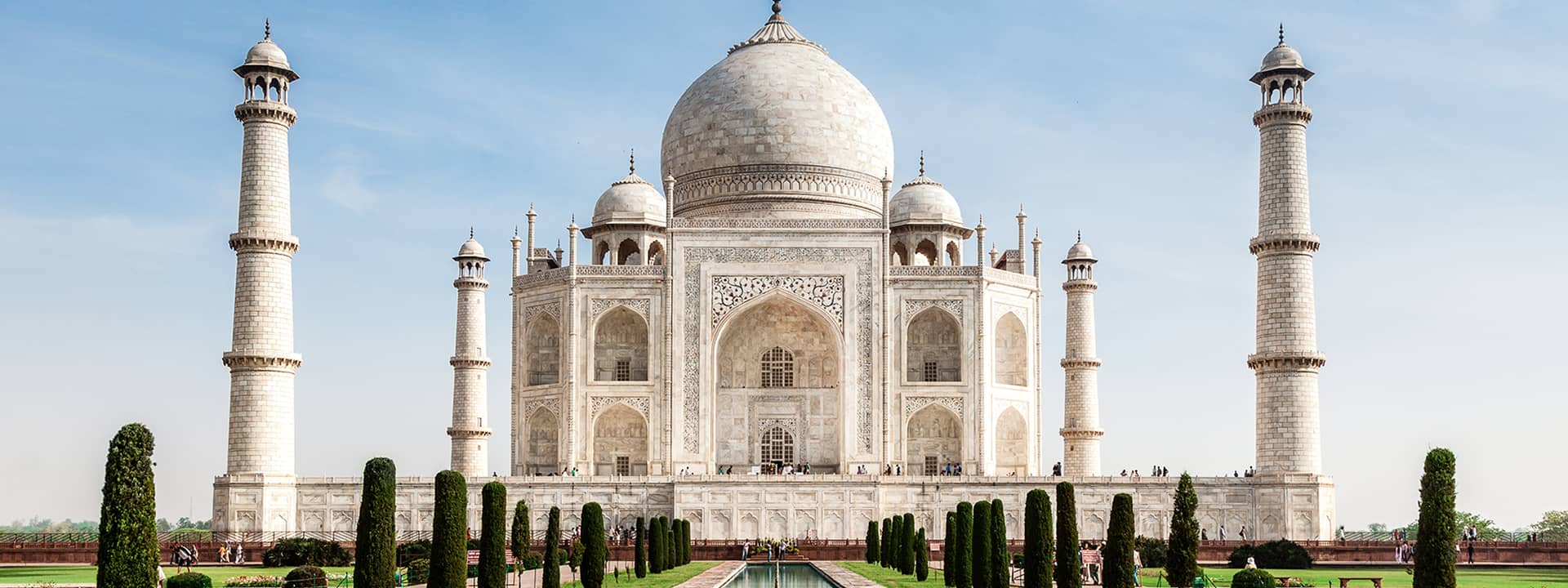
No trip when traveling to India is complete without experiencing the Taj Mahal. Built between 1632 and 1648 by the Mughal emperor Shah Jahan, this marble masterpiece was created as a mausoleum for his beloved wife, Mumtaz Mahal, who died during childbirth. It stands as one of the world’s most enduring symbols of love, blending Persian, Islamic, and Indian architectural styles into a design of perfect symmetry and breathtaking beauty.
The construction involved more than 20,000 artisans and craftsmen from across India and Central Asia, as well as materials sourced from as far away as Tibet, Sri Lanka, and the Arabian Peninsula. White Makrana marble forms the core structure, while semi-precious stones such as jasper, jade, turquoise, and lapis lazuli were inlaid to create delicate floral patterns that still shimmer in the sunlight centuries later.
Even those who have seen it in countless photographs are taken aback by its scale and precision. From the intricate carvings to the perfectly balanced minarets, every element reflects the Mughal vision of paradise.
Travel Tip: Arrive at sunrise to enjoy softer light and fewer crowds. The Taj Mahal changes color throughout the day, from pink at dawn to brilliant white at midday and shimmering silver under a full moon. If your India travel plans align with a full moon, consider booking an evening visit for one of the most romantic views imaginable.
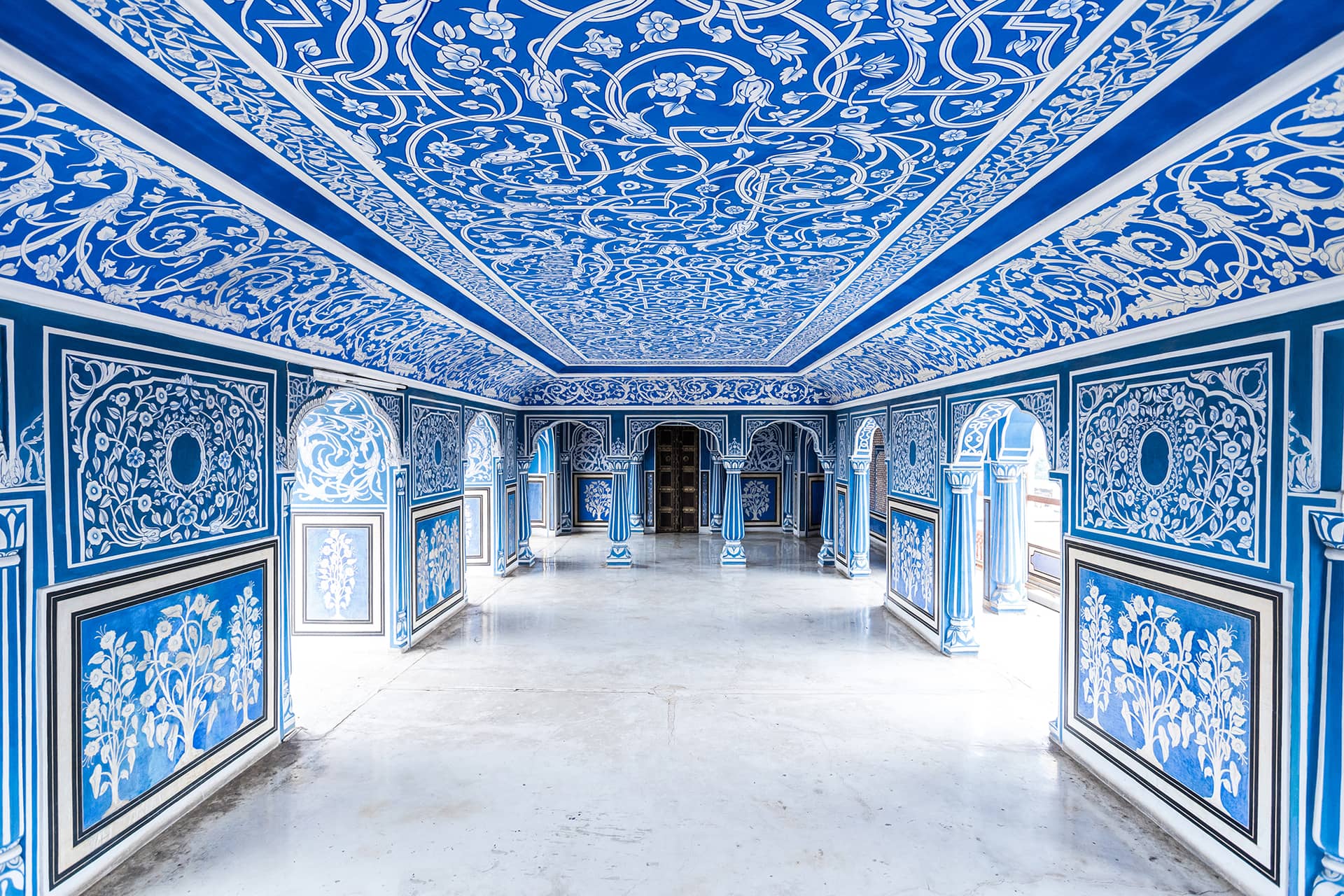
City Palace in Jaipur, Rajasthan, India
Jaipur’s City Palace
Known as the Pink City, Jaipur glows in warm tones from dawn to dusk, a tradition dating back to 1876 when the city was painted terracotta pink to welcome the Prince of Wales. At its center lies the City Palace, built in the early 18th century by Maharaja Sawai Jai Singh II, Jaipur’s founder. The complex blends Rajput and Mughal architectural styles and still serves as the residence of the royal family.
Within its grand courtyards and ornate gateways, visitors can explore palaces adorned with intricate latticework, delicate frescoes, and shimmering mirror mosaics. The Pitam Niwas Chowk courtyard features four gates, each representing a season and a Hindu deity, while the palace museums display royal costumes, weapons, manuscripts, and antique carpets that tell the story of Jaipur’s regal past.
The palace sits at the heart of the walled city, making it the perfect starting point for exploring Jaipur’s vibrant culture. Just steps away, you will find the famous Hawa Mahal (“Palace of Winds”), with its honeycomb façade of 953 windows, and bustling bazaars offering everything from hand-block-printed textiles to precious gemstones.
Travel Tip: Visit in the morning when the sunlight is soft on the pink walls, then wander through the markets for colorful fabrics, handcrafted jewelry, and fragrant spices—perfect keepsakes from your India travel journey.
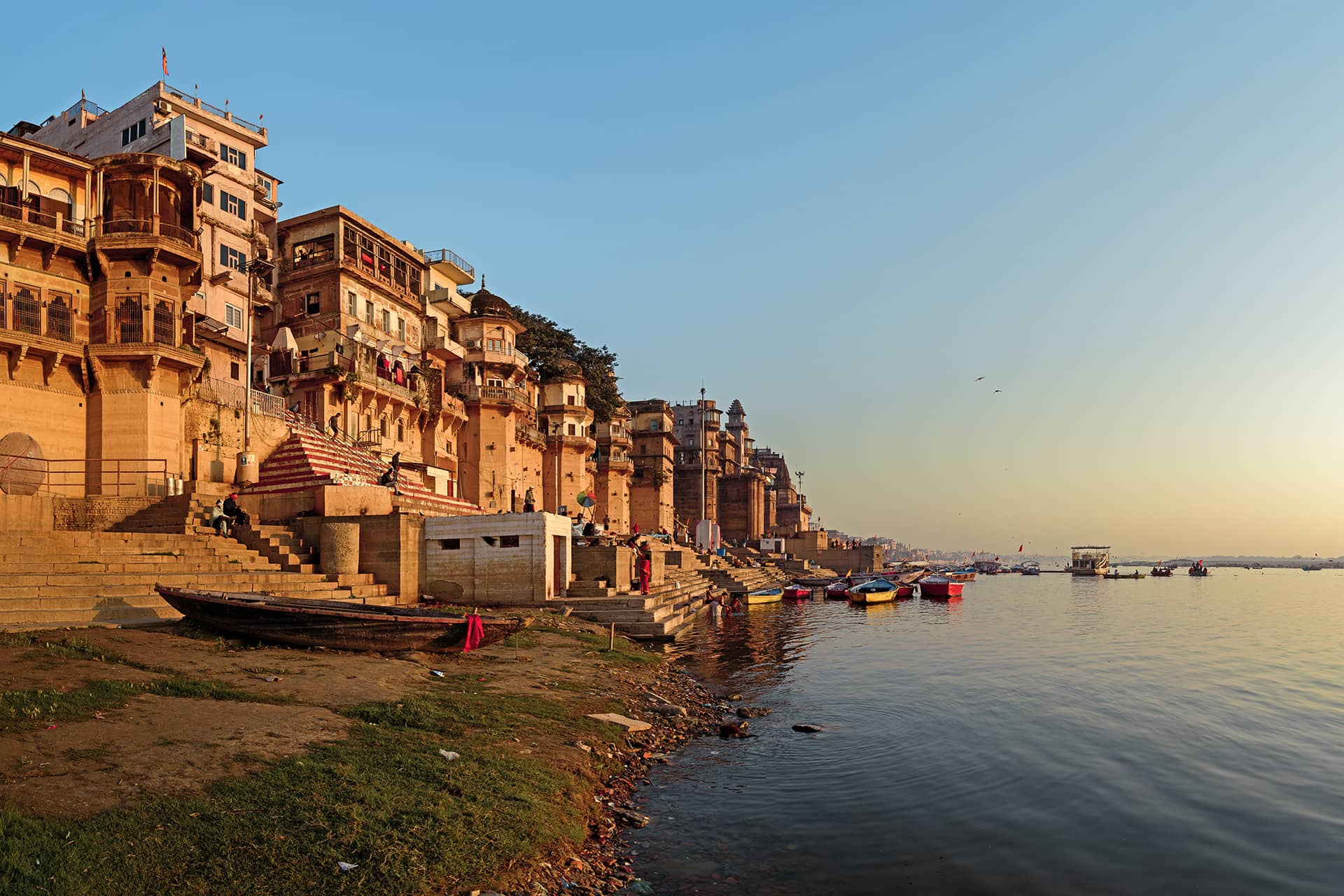
Ghats of Varanasi in India at sunrise.
Varanasi Ghats
Varanasi, on the banks of the Ganges, is often described as the soul of India. Considered one of the world’s oldest continually inhabited cities, its history stretches back over 3,000 years, with mentions in ancient Hindu scriptures and epics. The city’s ghats—stone steps leading down to the sacred river—were built and expanded over centuries, many commissioned by kings, nobles, and spiritual leaders from across India. Today, there are more than 80 ghats, each with its own story and purpose, from bathing and ritual purification to cremation and festival celebrations.
Some, like Dashashwamedh Ghat, are linked to ancient legends, while others, such as Manikarnika Ghat, are central to Hindu beliefs about the cycle of life and death. The ghats have been the stage for religious rituals, philosophical discussions, and artistic inspiration for millennia, making them not just steps to the river but a living archive of India’s spiritual and cultural heritage.
Life along the ghats is a constant flow of devotion and activity. Morning prayers, candlelit ceremonies, and saffron-clad priests create a tapestry of spiritual energy that is both timeless and ever-changing.
Travel Tip: Begin your visit with a sunrise boat ride to watch the city glow in the early light, when the ghats are at their most peaceful. In the evening, witness the Ganga Aarti ceremony, where priests swing large brass lamps and hundreds of oil lamps float across the water. For many travelers, this is the most profound and memorable moment of their India travel experience.

Majestic mehrangarh fort overlooking jodhpur at sunset.
Mehrangarh Fort, Jodhpur
Rising high above the Blue City of Jodhpur, Mehrangarh Fort is one of India’s most impressive strongholds, its massive stone walls sheltering ornate palaces, courtyards, and sweeping views over the desert landscape. Inside, the fort’s museum houses one of the finest collections of royal artifacts in India, from intricate miniature paintings and elaborate textiles to jewel-encrusted arms and armor.
The fort’s artistic treasures were celebrated internationally in the groundbreaking exhibition Peacock in the Desert: The Royal Arts of Jodhpur, India, organized by the Mehrangarh Museum Trust in partnership with the Museum of Fine Arts, Houston. Featuring over 250 objects spanning four centuries, it marked the first time many of these works had traveled outside India. The exhibition toured several major U.S. museums, captivating audiences and shining a global spotlight on Rajasthan’s royal heritage.
For Nomadic Expeditions guide Shaitan Singh, Jodhpur is more than just a destination—it is home. A proud member of the Rathore clan, whose dynasty has ruled the region since 1459, Shaitan carries the stories of his ancestors into every tour he leads. His grandfather’s tales of Marwar’s warriors protecting their people, the region’s prized Marwari horses, and traditions like local fairs and village gatherings are woven into his guiding, bringing the fort and its history vividly to life.
“When I walk visitors through the royal palace,” Shaitan says, “I’m not just sharing history from a textbook—I’m sharing the legacy of my family and my city. Every stone here has a story, and many are part of my own.”
Travel Tip: Plan to spend at least half a day exploring the fort and its galleries. In the late afternoon, golden light bathes the ramparts while the blue-painted houses of Jodhpur below create a striking contrast—an unforgettable scene in any India travel itinerary.

A tourist boat passes through a traditional Kerala houseboat on the backwater of Vembanad Lake.
Kerala Backwaters
When it is time to slow the pace, the Kerala backwaters offer serene beauty far from India’s bustling cities. This network of canals, rivers, and lagoons winds past swaying palms and villages where life moves to the rhythm of the water.
A houseboat journey through Alleppey is the quintessential way to experience the backwaters. Glide along in a traditional kettuvalam, passing mangroves, serene stretches of water, and villages where locals go about their daily routines. For families traveling to India, this is a peaceful, kid-friendly adventure that reveals an entirely different side of the country.
Beyond the backwaters, Kerala is rich with wildlife and cultural treasures. At Periyar National Park, a boat ride on Periyar Lake offers the chance to see elephants, tigers, and vibrant birdlife in their natural habitat. In Kochi, the iconic Chinese Fishing Nets line the shore, while the historic Fort Kochi area invites you to explore art galleries, watch classical dance performances, and enjoy fresh seafood straight from the Arabian Sea.
Travel Tip: Stay overnight on a houseboat for misty mornings and fiery sunsets over the water, then extend your visit to include Kerala’s wildlife reserves and coastal towns.
Experience India Your Way
Traveling to India is about more than visiting famous landmarks. It is about feeling the country’s vibrant spirit. Whether it is watching dawn break over the Taj Mahal, haggling for spices in Jaipur, admiring centuries-old art in Mehrangarh Fort, or gliding along Kerala’s waterways, every moment becomes part of your personal India travel story.
Nomadic Expeditions can craft a journey that combines these iconic sights with hidden gems known only to locals. Let us help you create an India experience that is authentic, enriching, and entirely your own.