Guardians of the White Reindeer: A Journey into Mongolia’s Northern Taiga
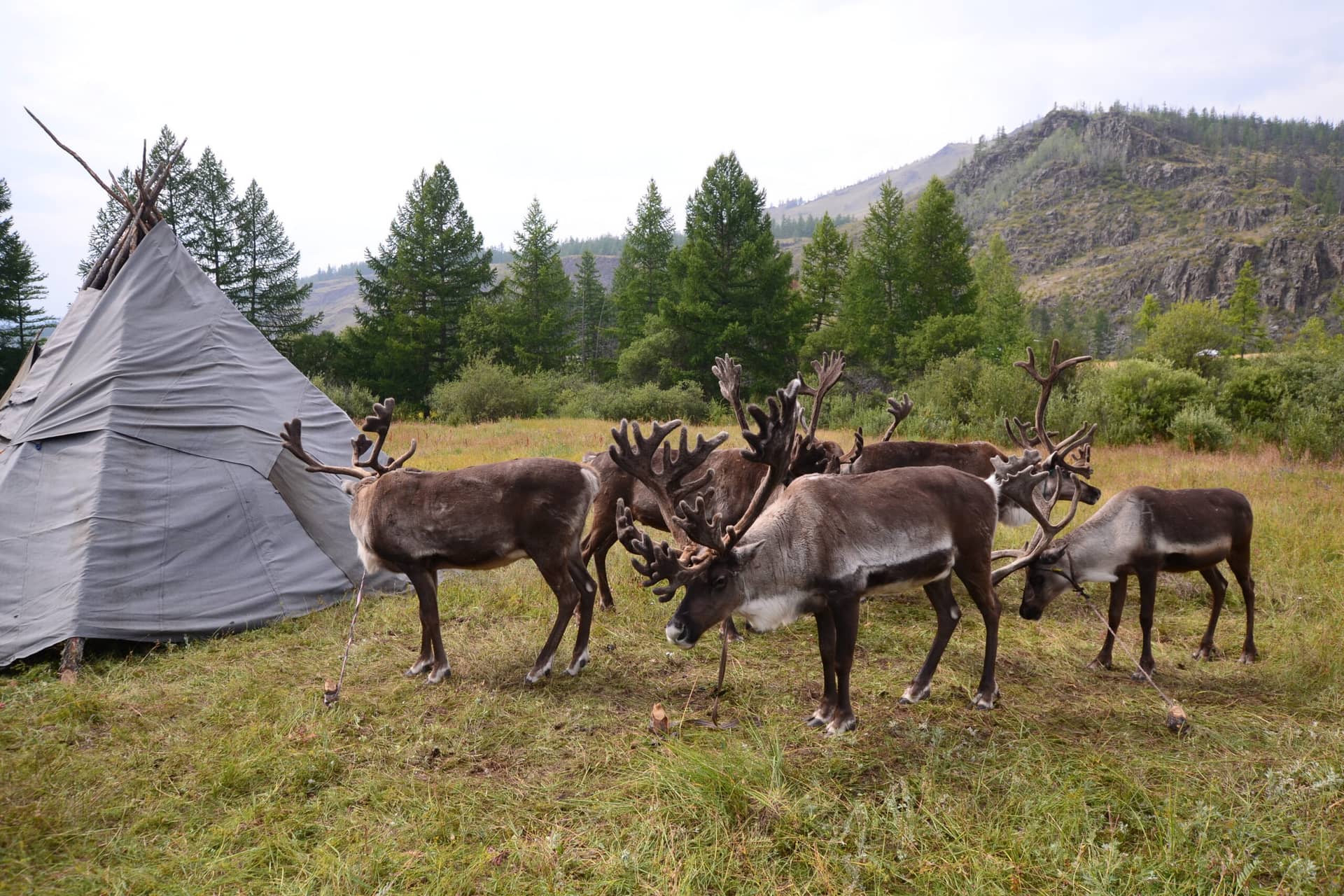
In Mongolia’s northern taiga, small clearings open within the forest, where urts stand among larch trees and reindeer move at the edge of camp.
Morning activity begins before the light fully reaches the ground. Smoke rises from the urts, and milking follows soon after, carried out with practiced familiarity. Reindeer pass between trees and return on their own patterns, shaping how work begins and how it continues through the day.
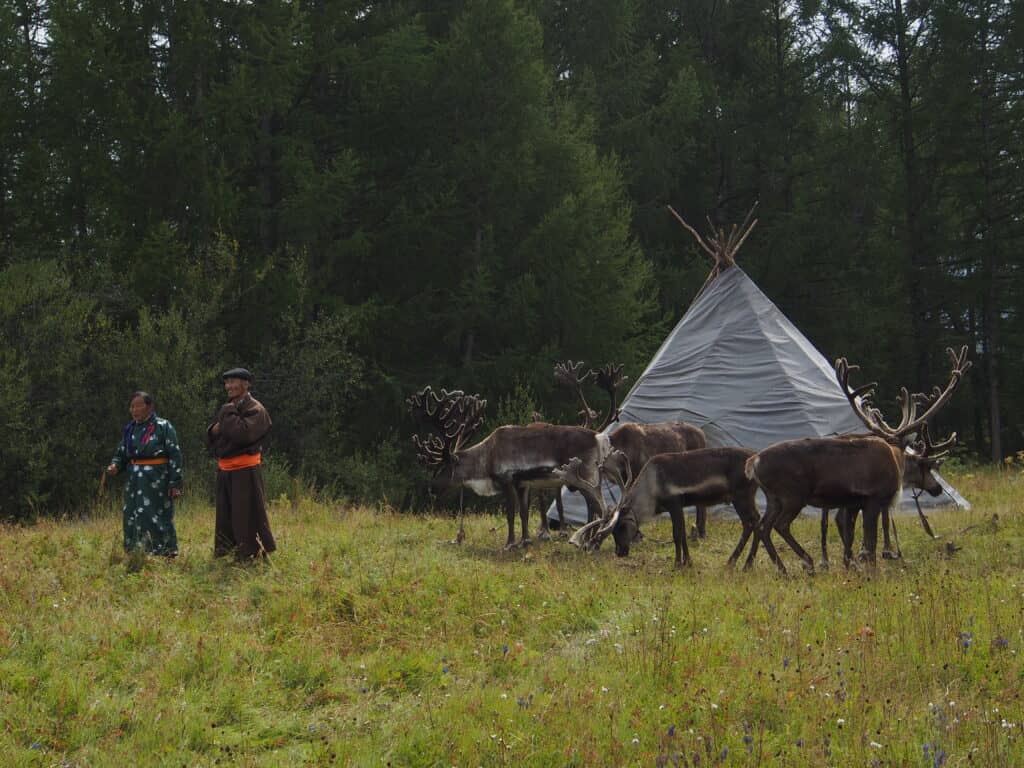
The Tsaatan, who call themselves Dukha, live in close alignment with this environment, moving when grazing thins and remaining only as long as conditions allow. Camps stay small, often just a few families, and the structure of each day comes through the work required to sustain both people and herd.
Life with the Reindeer
Reindeer are central to every aspect of life in the taiga.
Their milk is used throughout the day, prepared as tea or made into soft cheeses that form the basis of most meals. Animals move between the forest and camp, grazing independently but remaining connected to the families who depend on them. Standing near the herd, their movement begins to feel less directional and more circular, passing in and out of view as if the forest itself is part of their range.
They are also ridden, carrying people through terrain where other forms of transport are impractical. Children begin riding early, developing confidence through daily experience rather than formal teaching.
What emerges is a working relationship built through familiarity, where actions are understood without being spoken.
The Structure of Camp
Each urt is built with movement in mind.
Poles are cut and arranged so they can be taken down and rebuilt efficiently when the camp relocates. Inside, tools and equipment are positioned for immediate use, while certain areas are reserved for items that hold deeper meaning.
A camp may include only a few households, creating a close community where responsibilities are shared. Tasks are taken on as needed, without formal assignment.
Visitors are welcomed simply. Tea is offered, and space is made without ceremony. A place is cleared near the stove or along the edge of the urts, and it is understood that one settles in first, observing, before conversation finds its way.
Movement Across the Taiga
Camps relocate several times throughout the year, following the availability of lichen beneath the forest canopy. The decision to move is based on observation, how the herd feeds, how the ground holds, how conditions begin to change. Experienced horsemen tend to notice these shifts early, often before they become visible to others, adjusting routes and timing accordingly.
When a camp is taken down, only essential items are carried forward. The clearing is left behind with little trace. Over time, these routes become known through use, connecting one camp to another across the forest. Following these routes, it becomes clear how little marks their passage, paths exist more in memory than in anything fixed on the ground.

Reaching the Tsaatan
Access to the Tsaatan depends on careful coordination and local knowledge.
Travel into the taiga requires familiarity with terrain, seasonal conditions, and the current locations of camps. Routes are developed in collaboration with horsemen who know the region closely, and timing is considered so that visits coincide with where families are living at that moment.
Approaching in this way allows time in camp to remain undisturbed. The experience exists within the community as it is, rather than being arranged around the visitor.
For those seeking to travel here, Nomadic Expeditions arranges journeys into the taiga that follow these same principles. Each itinerary is developed with attention to conditions on the ground and in close partnership with local communities, allowing access to a region that remains difficult to reach without that level of preparation.