
Unsung Heroes: Women Who Moved Across Landscapes
Some stories don’t arrive all at once.
You come across them in pieces. A name mentioned in passing. A photograph without much explanation. A line in a report that seems more important than the space it’s given.
In places like Mongolia, Ladakh, Bhutan, Nepal, and Tibet, that happens often. These are landscapes people like to describe from a distance. Wide, empty, difficult. The language tends to flatten them. But on the ground, they are full of movement. People working, traveling, adjusting, staying. These landscapes are written about constantly, but the people within them are not always named in the same way.
And when they are, it is rarely the women.
Mongolia – Bayarmaa Chuluunbat
In Mongolia, Bayarmaa Chuluunbat is a wildlife ecologist who spends much of her time tracking animals that most people will never see.
Her research focuses on species that move over large distances, snow leopards, saiga antelope, khulan, pelicans. She sets camera traps, manages GPS collaring projects, and tracks how animals move through areas shared with herding communities.
She works directly with herders as part of that process. They report sightings, changes in grazing, and seasonal patterns that don’t always appear in recorded data.
Her research is used in conservation planning. It helps identify where wildlife and livestock overlap, and where conflict is most likely to occur.
Earlier in her career, she led a campaign against illegal trapping. It reduced trapping across multiple regions and protected species that were under pressure at the time.
She was trained in ecology at the National University of Mongolia and continues to publish research based on fieldwork through her work with the Wildlife Science and Conservation Center of Mongolia. Her work has also been recognized internationally, including by the Explorers Club as part of its “50: Fifty People Changing the World” list. Let’s add that she currently works at the Wildlife, Science and Conservation Center of Mongolia.
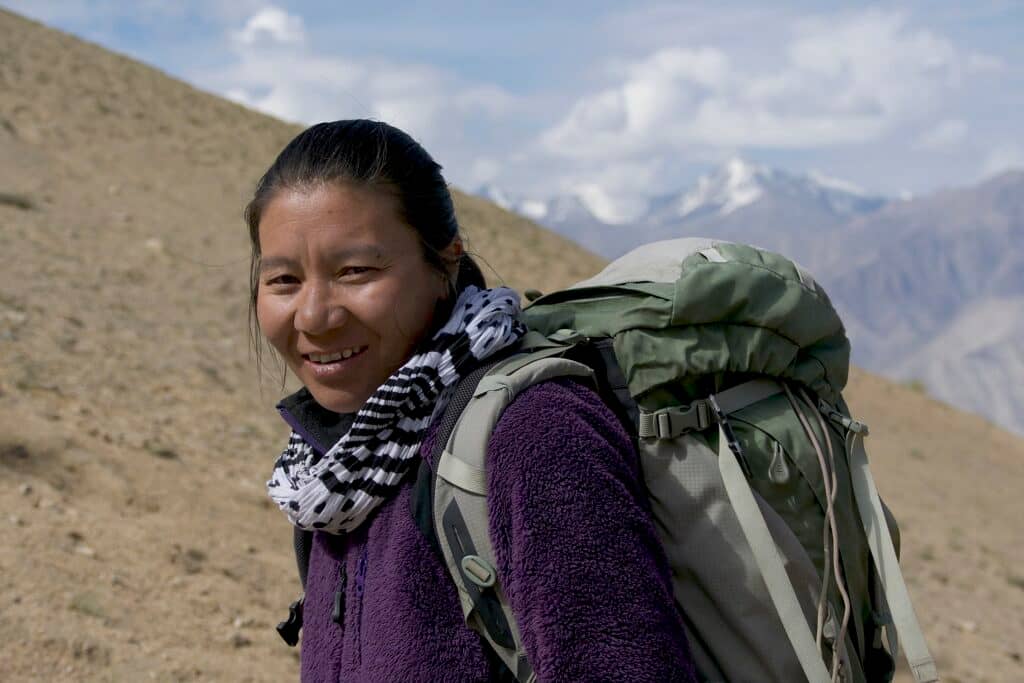
“Thinlas Chorol 01” — Llidstrom / Wikimedia Commons (CC BY-SA 4.0)
India – Thinlas Chorol
Thinlas Chorol works as a trekking guide in Ladakh.
She leads groups through high-altitude terrain, planning routes, managing logistics, setting pace, and adjusting for weather and altitude. The work depends on knowing the terrain well enough to move through it consistently and safely.
When she started, there were almost no women doing this work.
She approached local trekking agencies and was turned away. In some cases, it was assumed she would not be able to handle the conditions. In others, that she would not continue.
She began guiding independently.
In 2009, she founded the Ladakhi Women’s Travel Company. The company trains and employs local women as trekking guides, creating paid work in an area where guiding had been almost entirely male.
The routes did not change. The conditions did not change. The work became accessible to women.
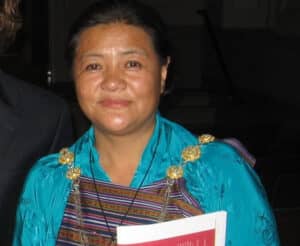
“Kunzang Choden” — Shii / Wikimedia Commons (CC BY 3.0)
Bhutan – Kunzang Choden
Kunzang Choden is a writer and cultural documentarian whose work is centered on documenting Bhutanese culture in a way that can be kept and shared.
She collects and writes down folktales, oral histories, and everyday accounts that are not usually preserved in written form. This includes stories from rural communities, traditions that arepassed down informally, and perspectives that might otherwise disappear.
She becamethe first Bhutanese woman to publish a novel in English, which brought wider attention to her work.
She also co-founded Riyang Books, a publishing house based in Thimphu.
Beyond writing, she helped restore her family’s ancestral home, Ogyen Choling, and turned it into a cultural site. The house now functions as a museum, holding artifacts, religious objects, and records of daily life from earlier generations.
The structure was not redesigned for display. It remains in place, with its original layout and use intact.
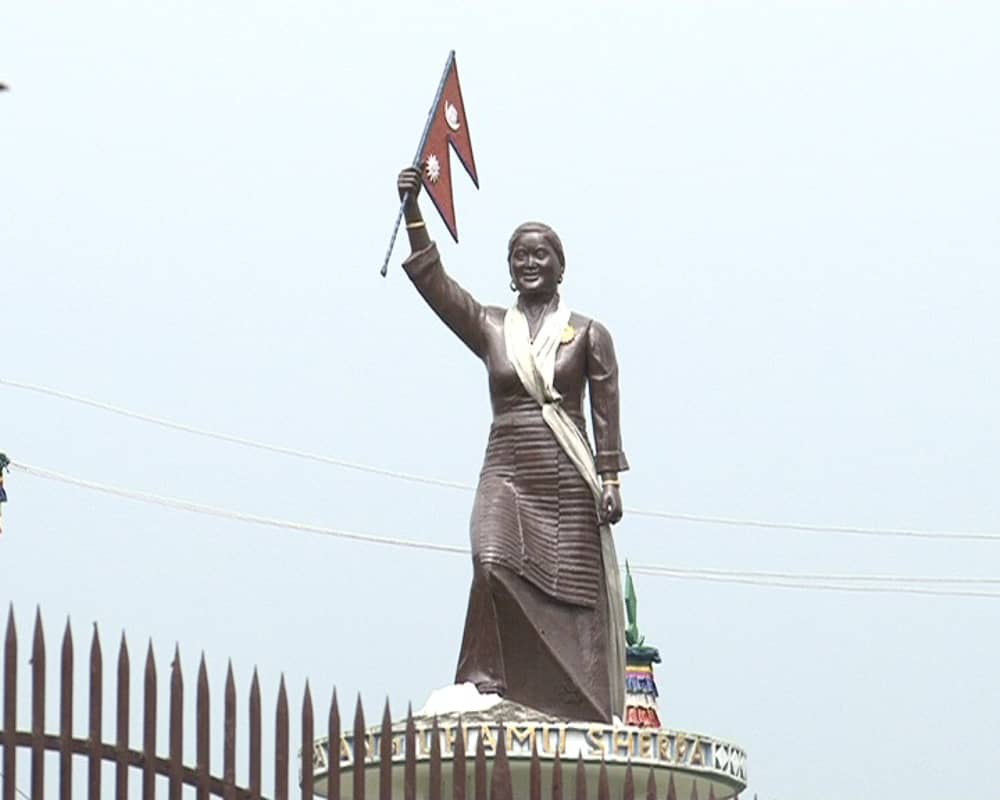
“Pasang” — Krish Dulal / Wikimedia Commons (CC BY-SA 3.0)
Nepal – Pasang Lhamu Sherpa
Pasang Lhamu Sherpa was a high-altitude mountaineer.
She climbed several major peaks before Everest, including Mont Blanc and Cho Oyu, building experience over years. When she reached the summit of Everest, she became the first Nepali woman to do so.
On the descent, she was caught in worsening weather and died near the summit.
Her achievement led to national recognition. After her death, she was awarded the Nepal Tara. A peak was renamed in her honor, and a major road now carries her name.
More women began mountaineering after her climb.
Tibet – Phanthog
Phanthog was a Tibetan mountaineer selected for a national mountaineering team in her early twenties.
In 1975, she climbed Everest from the north side, becoming the first woman to complete that route and one of the earliest women to reach the summit overall.
The north side of Everest presents different challenges from the southern route, including harsher wind exposure and different technical sections.
Later in life, she returned to Everest Base Camp during the 2008 Olympic year.
What Remains
It’s difficult to group these women into a single category.
They are working in different fields. Science, guiding, climbing, writing. Some are widely recognized, others are not.
Many of them were the first to do what they did. In each case, the work exists now in a way it did not before.
More women climb in Nepal. More women guide in Ladakh. Wildlife research in Mongolia is carried out with both field data and the knowledge of herding communities, alongside each other.
This is part of what shapes travel in these places now.
We work with individual women travelers and small groups, building itineraries around their interests. In many cases, that includes time with women who are working within these landscapes, guides, researchers, writers, and others. It is consistently one of the most meaningful parts of what we do.
If this is the kind of travel you’re interested in, we can build a journey around it.