Sacred Places Across the Himalaya: A Journey Through Spiritual Landscapes
The Himalaya is home to some of the world’s most significant sacred places, but their importance is not defined by temples or monasteries alone. Across Nepal, Tibet, and Bhutan, mountains, monasteries, and pilgrimage routes have shaped religious traditions for centuries. Many of these places remain active today, welcoming pilgrims and preserving practices that continue to define daily life in communities throughout the region.
This guide explores the sacred Himalaya through themes: mountains, monasteries, pilgrimage sites, and landscapes where nature itself is revered. Together, these places reveal how faith has shaped the region’s cultural heritage and why the Himalaya continues to inspire travelers from around the world.
At a Glance: Sacred Himalayan Landscapes
| Region | Sacred Site | Spiritual & Cultural Significance | Key Travel Note |
|---|---|---|---|
| Tibet | Mount Kailash | Sacred to 4 religions; 32-mile kora circuit | Elevation exceeds 18,000 ft |
| Nepal & Tibet | Mount Everest | Chomolungma / Sagarmatha; Sherpa puja ceremonies | Spring & autumn trekking seasons |
| Bhutan | Jomolhari | Home of a protective deity in Bhutanese Buddhism | Best experienced on multi-day foot treks |
| Bhutan | Paro Taktsang | 8th-century meditation cave of Guru Rinpoche | Perched 3,000 ft above Paro Valley |
| Tibet | Jokhang Temple | Houses Jowo Shakyamuni; heart of Tibetan Buddhism | Circled clockwise along Barkhor Street |
| Tibet | Rongbuk Monastery | World’s highest monastery near Everest North Base | Ideal for sunrise views over Everest |
| Nepal | Lumbini | Birthplace of Siddhartha Gautama (The Buddha) | Features Sacred Garden & Maya Devi Temple |
| Nepal | Boudhanath Stupa | Center of Nepal’s Tibetan Buddhist community | Active late afternoon circumambulations |
| Nepal | Muktinath | Shared holy site for Hindus (108 spouts) & Buddhists | Requires acclimatization in Mustang |
Sacred Mountains: Where Earth Meets the Divine
The Himalaya has long been understood as a sacred landscape where mountains are regarded as living beings rather than geographical features. Across the Himalaya, many peaks are believed to be the homes of protective deities or manifestations of enlightened beings. Their significance has shaped pilgrimage routes, local customs, and spiritual practice for centuries. Even today, some mountains are approached with reverence rather than conquest, reminding visitors that these landscapes hold meanings extending far beyond their dramatic scenery.

The Connections You Make on Small Group Travel Tours
By the time a journey begins, most travelers have already visited the destination dozens of times in their minds. They have studied maps, followed routes, read histories, and imagined what it might feel like to finally stand in a place that has occupied their attention for months, sometimes years.
Yet memory has a way of rearranging priorities. The places that inspire a journey remain important, but they are rarely remembered in isolation from the people who helped bring them to life.Nobody books a journey because they are excited to meet eleven strangers. Yet it is remarkable how often those strangers become part of the story people tell when they return home. The shift is gradual. It happens over shared meals, long drives, and conversations that begin with the destination before wandering elsewhere. Someone points out a bird in the distance and discovers they are traveling with an avid birder. A discussion about history stretches beyond dinner. A passing observation about a landscape sparks a debate that continues the following day.The groups themselves are rarely uniform. Travelers arrive from different countries, professions, and stages of life, often with very different reasons for choosing the same journey. One guest, reflecting on a Mongolia departure that brought together a wide range of ages and backgrounds, noted that “our group got along great from the beginning.”
Part of that chemistry may come from the destinations themselves. Journeys through places such as Mongolia, Bhutan, Tibet, and the Eastern Himalaya tend to attract travelers who share a similar outlook, even if their lives have taken very different paths. They are often curious by nature, willing to embrace uncertainty, eager to experience unfamiliar cultures and cuisines, and genuinely interested in learning from the people who call these places home. Those shared qualities become a common thread, creating space for conversations that feel open, thoughtful, and surprisingly easy from the very beginning.
What makes comments like that noteworthy is not simply that people enjoyed one another’s company. It is that the group became part of the experience itself. Travelers arrive focused on a destination. They leave with a richer understanding of that destination, shaped in part by the perspectives of the people who experienced it alongside them.
Mount Kailash, Tibet
For more than a thousand years, Mount Kailash has drawn pilgrims from across Asia. Sacred to Buddhists, Hindus, Jains, and followers of the Bon tradition, it is one of the few places where four religions converge around a single mountain. Unlike the world’s highest peaks, Kailash has never been climbed. Its summit remains untouched, preserving the mountain as a place of pilgrimage.
Pilgrims instead complete the kora, a 32-mile (52-kilometer) circuit around the mountain. For many, the journey is itself an act of devotion.
Travel Tip: The kora rises above 18,000 feet. Allow several days to acclimatize before beginning the journey.

Mount Everest (Sagarmatha/Chomolungma), Nepal and Tibet
Known locally as Sagarmatha in Nepal and Chomolungma in Tibet, Everest has long been part of a sacred landscape. Before climbing expeditions depart, many Sherpa communities hold a traditional puja ceremony to seek blessings and safe passage.
You do not need to climb Everest to appreciate its cultural importance. Villages throughout the Khumbu reveal a landscape where monasteries, mani walls, and prayer flags remain part of everyday life.
Travel Tip: Visit during the spring or autumn trekking seasons, and allow time to explore villages such as Namche Bazaar and Tengboche alongside the mountain trails.
Jomolhari, Bhutan
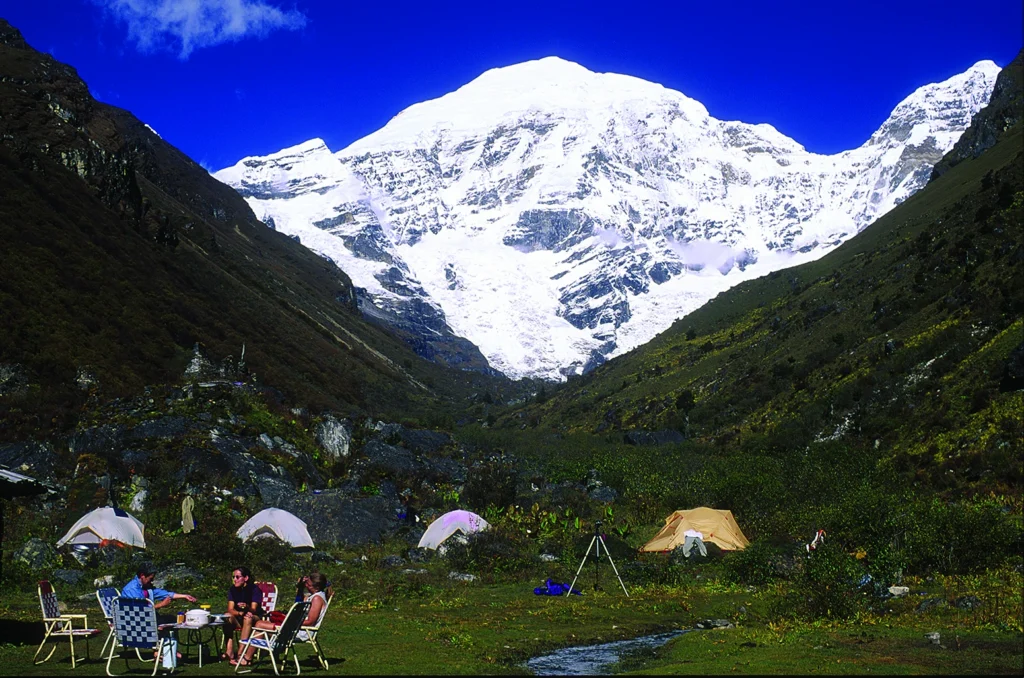
Jomolhari rises above western Bhutan as both a striking landmark and the home of one of the country’s protective deities. The mountain occupies an important place in Bhutanese Buddhist tradition and is approached with deep respect.
The best way to experience Jomolhari is on foot. The Jomolhari trek passes through forests, alpine meadows, and yak-herding communities before revealing uninterrupted views of the mountain.
Travel Tip: Spring and autumn offer the clearest conditions for trekking.
Monasteries Above the Clouds
Many of the Himalaya’s monasteries were established in remote landscapes chosen for study and meditation. Today, they remain active places of worship where daily rituals continue alongside monastic life.

Paro Taktsang (Tiger’s Nest), Bhutan
Perched nearly 3,000 feet above the Paro Valley, Tiger’s Nest is Bhutan’s most recognized monastery. According to tradition, Guru Rinpoche meditated here in the eighth century, helping establish Buddhism in Bhutan. The cave associated with his meditation remains at the heart of the monastery.
The trail climbs steadily through pine forest before the monastery comes into view, clinging to the cliff face. Monks continue daily prayers here while pilgrims arrive throughout the year.
Travel Tip: Begin the hike early to enjoy cooler temperatures and fewer visitors.

Jokhang Temple, Tibet
At the center of Lhasa’s old city, the Jokhang Temple has been the spiritual heart of Tibetan Buddhism since the seventh century. It houses the revered Jowo Shakyamuni statue, regarded by many as Tibet’s most sacred image of the Buddha, and remains the destination of countless pilgrims each year.
Outside the temple, pilgrims make their way around Barkhor Street in a continuous clockwise procession, spinning prayer wheels and performing full-body prostrations before entering the temple.
Travel Tip: Stay overnight if your itinerary allows. Sunrise over Everest is well worth the early wake-up.
Rongbuk Monastery, Tibet
Near Everest’s northern base, Rongbuk Monastery has served monks and nuns since 1902. Prayer flags stretch across the plateau with Everest rising directly behind the monastery, creating one of the Himalaya’s most distinctive religious landscapes.
Travel Tip: Stay overnight if your itinerary allows. Sunrise over Everest is well worth the early wake-up.
Pilgrimage Sites and Living Faith
Pilgrimage has connected communities across the Himalaya for centuries. These sacred places continue to welcome worshippers from across Asia while preserving traditions that remain part of everyday life.

Lumbini, Nepal
Lumbini is revered as the birthplace of Siddhartha Gautama, who later became the Buddha. Pilgrims have journeyed here for more than two thousand years, making it one of Buddhism’s most important destinations.
The Sacred Garden centers on the Maya Devi Temple, which marks the traditional birthplace of the Buddha. Beyond it, monasteries built by Buddhist communities from around the world reflect the diversity of Buddhist traditions while emphasizing their shared origins.
Travel Tip: Plan a full day in Lumbini to explore both the Sacred Garden and the international monastic zone.
Boudhanath Stupa, Nepal
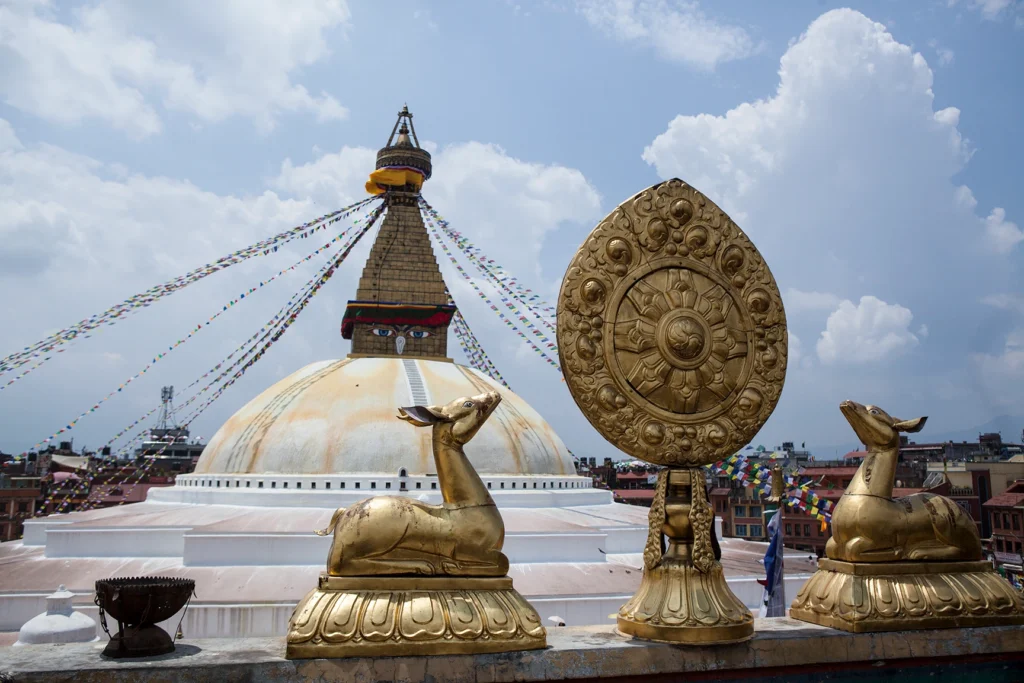
One of the largest stupas in the world, Boudhanath has long served as the spiritual center of Nepal’s Tibetan Buddhist community.
Throughout the day, pilgrims circle the stupa, turning prayer wheels and reciting mantras beneath its painted eyes. Nearby monasteries continue daily ceremonies while local residents gather in the surrounding square.
Travel Tip: Visit in the late afternoon, when pilgrims gather for evening prayers.
Muktinath, Nepal
High in the Mustang region, Muktinath occupies a unique place in the Himalaya’s spiritual geography. It is sacred to both Hindus and Buddhists, who approach the temple through different traditions while sharing the same destination.
Hindu pilgrims come to seek liberation from the cycle of rebirth, passing beneath 108 water spouts fed by mountain springs before entering the temple. Buddhists associate the site with Guru Rinpoche and view the eternal flame that burns naturally within the complex as a symbol of the union of the elements. The coexistence of these beliefs reflects the cultural exchange that has shaped the Himalaya for centuries.
Travel Tip: Because of its elevation, allow time to acclimatize before visiting.
Visiting Sacred Places with Respect
Many of the Himalaya’s sacred places remain active centers of worship. Dressing modestly, observing local customs, and approaching these sites with curiosity and respect helps preserve traditions that have endured for centuries.
For travelers seeking a deeper understanding of the region, visiting these places is only part of the journey. The stories behind them, shared by knowledgeable guides and local communities, provide the context that brings each destination into focus.
Nomadic Expeditions designs journeys that bring this context to life through expert guides, meaningful cultural encounters, and thoughtfully crafted itineraries across Nepal, Tibet, and Bhutan. Whether visiting ancient monasteries, walking historic pilgrimage routes, or exploring remote mountain valleys, each journey is designed to foster a deeper understanding of the people, traditions, and landscapes that define the Himalaya.
Frequently Asked Questions About Sacred Sites in the Himalaya
What etiquette should travelers follow when visiting Himalayan temples and monasteries?
When visiting active sacred places in Nepal, Tibet, and Bhutan, travelers should dress modestly (covering shoulders and knees). Always circumambulate stupas, temples, and mani walls in a clockwise direction, remove shoes before entering inner shrine rooms, and ask for permission before photographing monks or rituals.
Why is Mount Kailash never climbed?
Mount Kailash is revered as a holy mountain by Buddhists, Hindus, Jains, and followers of the Bon tradition. Out of religious respect for its sacred nature, climbing Mount Kailash is forbidden; pilgrims complete a 32-mile (52 km) circuit (kora) around its base instead.
How do I prepare for high-altitude pilgrimage sites like Kailash or Muktinath?
Many spiritual sites across the Himalaya lie at high elevations, Mount Kailash’s circuit reaches above 18,000 feet, and Muktinath is located high in the Mustang region. It is essential to include dedicated acclimatization days in your travel itinerary, stay hydrated, and maintain a steady, gradual pace.
Can non-Buddhists visit Paro Taktsang (Tiger’s Nest)?
Yes, travelers of all backgrounds are welcome to hike to Tiger’s Nest. Because it is an active monastery, visitors must leave bags, cameras, and phones in lockers outside the inner shrines and observe silence and respectful behavior while inside.
Ready to Experience the Sacred Himalaya?
Plan your journey with the Asian travel experts. Explore custom and small-group itineraries to Nepal, Tibet, and Bhutan with Nomadic Expeditions.